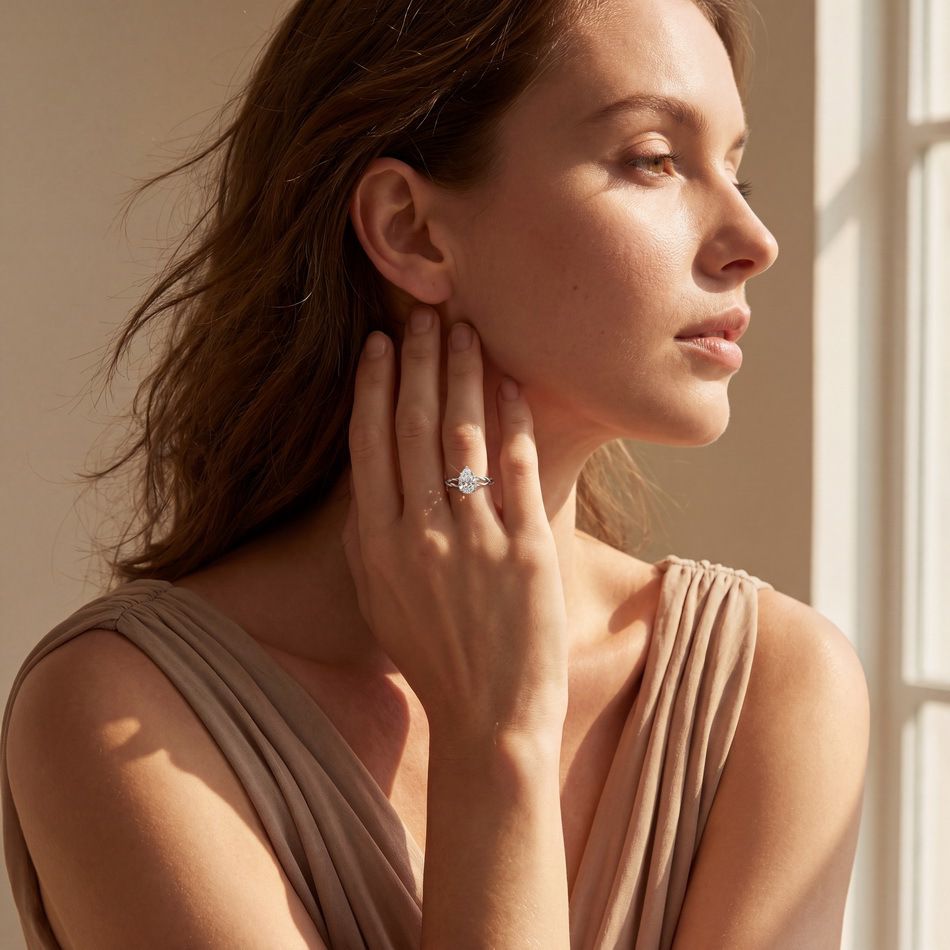
Wedding Rings & Bands
Half Eternity Bands: A Practical, Sparkling Wedding Ring Choice
When shoppers picture an eternity band, they imagine a full loop of stones wrapping completely around the finger. That look is gorgeous, but it comes with trade-offs: it cannot be resized easily, the back of the band wears thin from friction, and repairs get complicated. A half eternity band splits the difference. Stones run across the front, usually the top half or two-thirds of the circumference, while the back of the ring stays plain and solid. The result reads as a glittering band from every angle most people actually see, but it behaves like a normal ring behind the scenes.
What "half" actually means
There is no single universal line between half and three-quarter eternity. Most jewelers describe a half eternity as stones covering roughly the front half of the ring, from one shoulder to the other. A three-quarter setting extends a little further around each side. The important part is that the inner back of the band remains plain metal, which is what makes the ring practical. When you are comparing quotes, ask exactly how many stones are set and how far around they travel so you are not comparing a half band to a three-quarter band on price alone.
Why buyers choose half over full eternity
The practical advantages are the reason this style has stayed popular for generations:
- Resizing is straightforward. A plain back can be cut and stretched like any classic band, which matters if your finger size changes after the wedding.
- Less hidden wear. Stones on the underside of a full eternity band grind against desks, countertops, and other rings daily. A plain back avoids that stress.
- Lower cost. Fewer stones means a friendlier price, and you can spend more on better cut and clarity for the stones that are actually visible.
- Stackable confidence. A half band sits neatly next to a solitaire or another stack without stones rubbing against stones.
If you have already seen the full eternity option and are hesitating, our piece on eternity bands for retailers and the notes on resizing an eternity band explain exactly where the friction points are.
Pairing it with an engagement ring
Half eternity bands are natural stackers. They sit flush beside a solitaire and add a line of light without competing. If your engagement ring has a raised setting, a slightly higher band may be needed; if it sits low, a thin half band tucks right in. The width of the band should echo the proportion of your center stone. A 1-carat oval usually pairs beautifully with a 2 to 2.5 millimeter half band, while a larger halo can carry a 3 millimeter version. For width choices more broadly, the wedding band width guide lays out the proportions.
Care and everyday wear
A half eternity band is still a stone-set ring, not a plain metal one. Prongs catch on sweaters and gloves, so remove the ring before heavy lifting or cleaning. Have the prongs checked every couple of years the same way you would an engagement ring. Because the back is plain, you can polish the band without risking the stones, which keeps the whole ring looking fresh.
Choosing the right stone size and spacing
Half eternity bands read best when the stones are evenly spaced and uniform in size. Gaps between stones catch the eye and look unfinished, while stones packed too tightly rub against one another and chip. Most half bands use small round stones between 1.0 and 1.8 millimeters, set in shared prongs or bead settings that keep the front of the band looking clean. Decide whether you want the stones to run edge to edge across the top, which looks fuller, or leave a little plain metal on each shoulder, which reads lighter and pairs more easily with an engagement ring.
Think about how the band will live next to your ring. If your engagement band has pave on its shoulders, a matching half eternity in the same stone size creates a continuous line of light; if your solitaire is plain metal, a half band adds all the sparkle on its own. Either way, choose a band width that matches the proportion of your engagement setting so the two pieces look like they belong together rather than bought separately.
For anyone who wants the glamour of an eternity look without the long-term complications, the half eternity band is the quiet workhorse of bridal jewelry. It photographs beautifully, stacks cleanly, and forgives the small real-world changes that come with being married. For most couples, that balance of glamour and practicality is exactly what a wedding band should offer.
The history and conventions of engagement rings are outlined in the Wikipedia entry on engagement rings.
Frequently Asked Questions
What ring sizes can you supply in bulk?
US sizes 5–12 including half sizes. Send a size breakdown with your order and we cast to that curve; comfort-fit inner bands reduce resize requests.
Can I order a mixed size run instead of one size?
Yes. Mixed runs are standard for wholesale: specify quantity per size and we pack and label by size at no extra labor cost.
What is the MOQ for custom ring designs?
50 pieces per design for existing molds; 100–300 pieces when a new mold or CAD model is required.
How should I price rings for retail margin?
Most partners use a 3–4x markup on FOB cost for sterling and 2.5–3x for moissanite solos, which keeps landed cost under 30% of retail.
Send your spec sheet — stone, cut, size, plating and quantity — and we will return a costed timeline.
Ask the workshop