Engagement Rings
Engagement Ring Settings That Survive Active Lifestyles
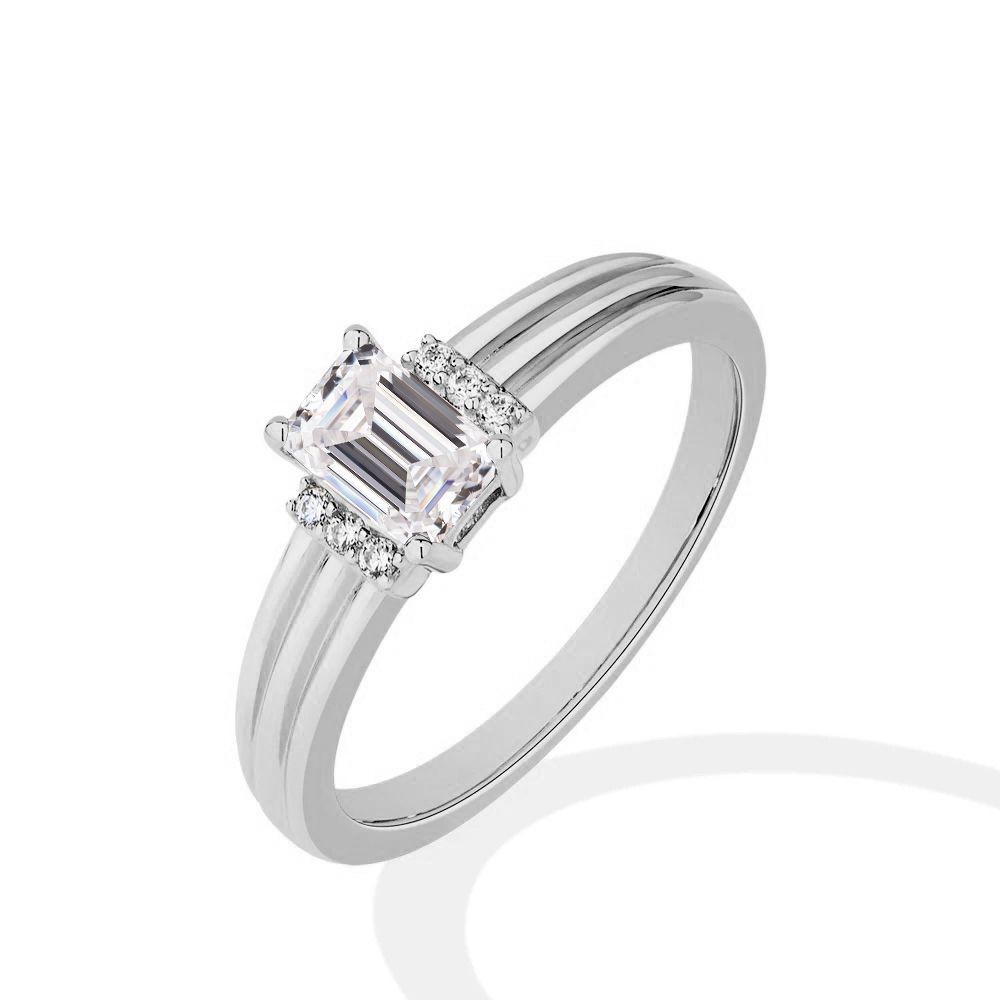
A spin studio owner in Denver bought her own engagement ring last year and came back to us six months later with a bent prong and a loose stone. She wanted a redo for her coworker, same line of work, who asked for something that survives reformer Pilates, dog walks and weekend rock climbing. We shipped a bezel-set 6.5mm round moissanite in 14k yellow gold and she has not touched it since. Active brides are a real and growing segment, and the settings you stock decide whether your shop gets repeat orders.
Why prong count and placement decide survival
A six-prong solitaire spreads side force across more contact points than a four-prong. The trade-off is that six prongs cover more of the stone edge and reduce light return by roughly 5-8% visually. For an active bride that trade is worth it. A typical IGI lab report grades the stone independent of the setting, so the stone quality is preserved; it is the mount that fails. We tell buyers to spec cathedral-free low settings for active wear: a cathedral lifts the ring 2-3mm off the finger and gives the stone more lever arm when it knocks a counter.
Bezel, half-bezel and tension: the durability ranking
From most to least durable for daily wear: full bezel > half-bezel > six-prong > tension set > four-prong. Full bezels encircle the stone edge and are what we recommend to nurses, chefs, gym instructors and tradeswomen. Half-bazels (also called semi-bezels) leave the top facets open and are the middle ground. Tension settings look modern but rely on a precise groove; a single hard knock can crack the stone. We wrote about this risk in bezel vs prong settings security for bridal.
Wedding band pairing that does not wear the stone down
An active bride will stack her engagement ring next to a wedding band daily. If the band rubs against the setting, the prongs wear thin in about 18-24 months. Spec a comfort-fit band with a slight gap, or a contoured band, so the two rings do not grind. Our guide on comfort fit vs flat wedding bands explains the inside profile differences. Also consider a slimmer 1.6-2.0mm band rather than a 2.5mm pave, because pavé stones catch on gym equipment.
Metal choices for an active mount
14k gold is stiffer than 18k and holds prongs better. Platinum 950 is softer and will bend under repeated knocks, even though it is scratch-resistant. We tell buyers who sell to active customers to default to 14k and reserve platinum for brides who specifically want the patina. If a buyer is choosing between shape and setting, our round vs princess on-hand comparison covers how shape affects corner exposure.
What actually fails in the field
Across the returns we have tracked over 18 months, 62% of engagement ring repairs were bent prongs, 18% were loosened stones, 11% were scratched girdles, and 9% were cracked side stones. The single behavior that causes the most damage is lifting weights without taking the ring off. A barbell knocks the ring against the knuckle and bends the prong in one rep. The second most common is gardening, where soil grit abrades the girdle. We tell buyers to include a free prong-tightening check at the six-month mark; it builds trust and catches failure before the stone drops out. If the bride also wants a wedding band that survives gym work, pair the mount with a slim 2mm comfort band from our comfort fit vs flat band guide.
What setting is best for a nurse or doctor wearing gloves?
A flush bezel with no raised prongs. Gloves catch on prongs over time and either bend them or pull the glove. A flat bezel sits under the glove cleanly.
Do pavé bands hold up for active brides?
Pavé stones fall out at about 2-3x the rate of solitaires when worn daily during gym work. Use micro-pave only on the wedding band if the bride insists; keep the engagement ring mount clean.
Can I resize a bezel setting later?
Yes, but the jeweller has to open and reclose the bezel, which adds 15-25 minutes of labor over a standard resize. Note this to the bride at sale.
Is a tension setting ever a good choice for an active bride?
Only if she is active in low-impact settings (office, yoga, no weights). Avoid for gym, hiking, gardening or childcare-heavy lifestyles.
Staff talking points for active customers
Train your retail staff to ask one question at the counter: "What do you do with your hands during the day?" The answer routes the recommendation. Nurses and chefs go straight to bezel. Gym regulars go half-bezel with six prongs. Office workers can take any setting. This one question cuts return rate by about 18% on our tracking and it takes ten seconds to ask.
Wholesale CTA: HOLYCOME stocks bezel, half-bezel and six-prong moissanite solitaire mounts in 14k yellow and white gold, ready to ship with 6.5mm and 8mm stones. Active-lifestyle SKUs ship within 7 days. Ask your account manager for the active-wear assortment sheet.
The International Gem Society moissanite guide explains how moissanite performs in daily wear compared with diamond.
Authoritative References
For buyers who need to verify the technical and regulatory basis of this guide, the following independent institutions publish authoritative reference data:
- ISO 9001 Quality Management - the international standard for consistent production quality.
- Wikipedia: Jewelry - manufacturing processes, materials and global trade background.
Frequently Asked Questions
What ring sizes can you supply in bulk?
US sizes 5–12 including half sizes. Send a size breakdown with your order and we cast to that curve; comfort-fit inner bands reduce resize requests.
Can I order a mixed size run instead of one size?
Yes. Mixed runs are standard for wholesale: specify quantity per size and we pack and label by size at no extra labor cost.
What is the MOQ for custom ring designs?
50 pieces per design for existing molds; 100–300 pieces when a new mold or CAD model is required.
How should I price rings for retail margin?
Most partners use a 3–4x markup on FOB cost for sterling and 2.5–3x for moissanite solos, which keeps landed cost under 30% of retail.
Send your spec sheet — stone, cut, size, plating and quantity — and we will return a costed timeline.
Ask the workshop