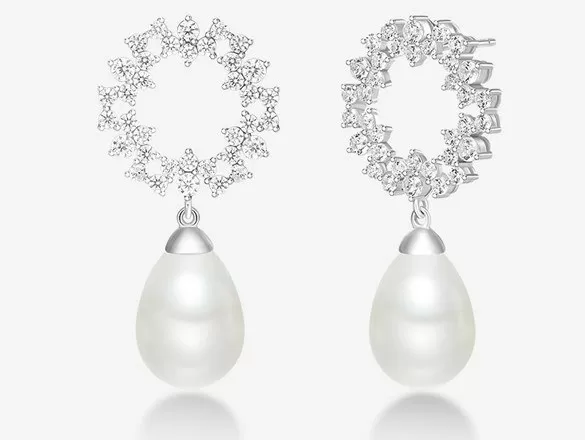
Earrings
Earring Back Types: When to Stock Which
Walk a new buyer through an earring order and they will debate stone size, metal tone and prong style for twenty minutes. Then they will ship everything on the cheapest push-back the factory includes, and wonder six months later why customers are losing studs. The earring back is the most overlooked component in the category, and it is the one that decides whether a stud stays on a customer's ear or ends up on a restaurant floor.
The four back types
Not all backs are built for the same job. Here is how they compare on the bench and on the ear.
| Back type | Hold strength | Best for | Warranty risk |
|---|---|---|---|
| Plastic push-back | Low | Costume fashion only | High - stretches out fast |
| Metal push-back (clutch) | Medium | Everyday studs up to 5mm | Low - standard for fine studs |
| Screw-back | High | 6.5mm and heavier studs | Low - most secure |
| Latch-back (for drops) | High | Dangle and drop earrings | Low - hinges closed |
Match the back to the stone weight
A 5mm prong stud weighs little enough that a standard metal push-back holds it all day. A 6.5mm stud weighs more, and the post pulls through the lobe under gravity, which is why heavier studs come on screw-backs. A drop earring swings and catches on hair, which is why drops use a hinged latch-back that cannot slide off. Match the back to the weight of the piece and you eliminate most loss claims.
- Ship studs up to 5mm on standard metal push-backs.
- Ship 6.5mm studs and heavier on screw-backs.
- Ship drops and dangles on hinged latch-backs.
- Never ship fine studs on plastic push-backs; they stretch out in months.
Telling the customer how the back works
Most loss claims happen because the customer does not know the back exists. A screw-back has to be twisted on, not pushed. A latch-back has to click shut. Show the customer how to open and close the back on her own ear at the sale. It takes thirty seconds and it is the difference between a stud that stays on and one that ends up in a hotel bedding bin. Train your staff to do this on every stud sale, not only on the expensive ones.
Spare backs as a small revenue line
Keep a jar of spare push-backs and screw-backs behind the counter. A customer who loses one back comes back in, and you either hand her a spare for free or sell her a pair for a few dollars. Either way, she walks out happy and she comes back into the store. That return visit is worth more than the back itself, because she will browse the pendant case while she is there. You can review the current earring range and the backs each style ships on inside our wholesale earring collection.
The post matters as much as the back
A back only works if the post is the right length and gauge. A post that is too short will not hold a screw-back; a post that is too long jabs the back of the ear. Our studs use .925 silver posts, nickel-free, at a standard length that fits most earlobes. For customers with thick lobes, a longer post is a bench adjustment, not a reason to return the pair. Keep a few spare posts behind the counter for that small share.
Sensitive ears and the nickel note
A small but steady share of customers cannot wear base-metal posts. Our posts are nickel-free .925 silver, which covers almost everyone. The customers who still react need solid gold, and that is the upsell to a 14k pair rather than a plated one. Keep one 6.5mm solid-gold pair in the case for that shopper. She will spend the extra eighty dollars without blinking, because she has spent years assuming nice earrings are simply not available to her.
- Use metal push-backs on studs up to 5mm.
- Use screw-backs on 6.5mm and heavier studs.
- Use hinged latch-backs on drops and dangles.
- Never ship fine studs on plastic push-backs.
The earring back is the component most buyers forget, and the one that generates the most warranty emails. Match it to the stone weight, show the customer how it works, and keep spares behind the counter. That one habit eliminates most of the loss claims that otherwise eat the margin on the whole earring category.
Match the back to the stone weight, show the customer how it works, and keep spares behind the counter. Those three habits eliminate most of the warranty claims that otherwise eat the earring margin. The earring back is a small detail, but it is the detail that decides whether a stud stays on a customer's ear or ends up lost. Spare backs also bring customers back into the store, and that return visit is worth more than the back itself.
For the legal text behind our material compliance, see the REACH Regulation (EC) No 1907/2006 on EUR-Lex.
Frequently Asked Questions
What ring sizes can you supply in bulk?
US sizes 5–12 including half sizes. Send a size breakdown with your order and we cast to that curve; comfort-fit inner bands reduce resize requests.
Can I order a mixed size run instead of one size?
Yes. Mixed runs are standard for wholesale: specify quantity per size and we pack and label by size at no extra labor cost.
What is the MOQ for custom ring designs?
50 pieces per design for existing molds; 100–300 pieces when a new mold or CAD model is required.
How should I price rings for retail margin?
Most partners use a 3–4x markup on FOB cost for sterling and 2.5–3x for moissanite solos, which keeps landed cost under 30% of retail.
Send your spec sheet — stone, cut, size, plating and quantity — and we will return a costed timeline.
Ask the workshop