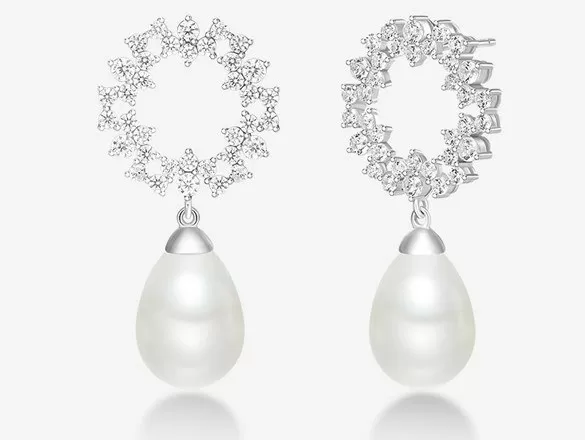
Earrings
Clip-On and Non-Pierced Bridal Earrings: A Comfort Guide
A bride with pierced ears has the whole earring case open to her. A bride without piercings faces a smaller, thinner selection—until she knows where to look. Non-pierced bridal earrings have improved dramatically, and a well-made clip-on can hold a dangling or chandelier style for a ten-hour wedding day without pinching. The secret is choosing the right clip mechanism and fitting it properly before the big day, rather than improvising on the morning of the ceremony.
The main non-pierced mechanisms
Not all clip-ons are equal. The hinge-back clip-on is the most common: a spring-loaded lever closes against a padded pad behind the earlobe. It is adjustable and comfortable, but a cheap one pinches. The screw-back style lets the wearer turn a small screw to set the pressure precisely, which is the gold standard for all-day comfort, though it takes a moment to put on. A third option, the lever-backed or hinged hoop, is more common in pierced designs but appears in some non-pierced small hoops. Buyers who already know earring back conventions can lean on the broader guide to earring back types to understand how each closure behaves.
For a bride who wants drama, a clip-on chandelier or drop is absolutely feasible—provided the clip is a quality hinge or screw-back and the earring’s weight is balanced. Heavy, bottom-loaded drops will tug any earlobe, pierced or not, so choose styles where the stones sit close to the fitting rather than dangling far below it.
Getting a comfortable fit
The single most common complaint about clip-ons is that they hurt after a few hours. This is almost always a pressure problem, not a design problem. A screw-back can be turned out a quarter turn to lighten the grip. A padded clip—the soft plastic or rubber pad behind the lobe—spreads the pressure so the clip does not dig into one point of skin. If a pair comes without padding, adding thin earring pads is an inexpensive fix. A bride should buy her wedding earrings at least a few weeks early and wear them around the house for an hour at a time, so the fit is proven before she stands in front of an audience.
Styling with the wedding look
Non-pierced earrings can match any bridal aesthetic. A small clip-on huggie reads modern and minimal; a pearl clip-on stud reads classic; a clip-on chandelier reads full-on glamour. The style should coordinate with the hair and dress, just as pierced earrings would. Brides deciding by updo or down-do can reference how to choose bridal earrings by wedding hairstyle—an updo shows off drop and shoulder-grazing silhouettes, while hair worn down pairs better with studs or small hoops so the metal does not tangle in strands.
Day-of tips
On the wedding morning, put earrings on after hair and makeup so sprays do not dull the settings, and before the necklace if the pieces layer. Carry the original packaging and a tiny spare set of earring pads in the clutch, so a loosened clip can be fixed quietly between photos and the reception. With a quality mechanism and a break-in period, non-pierced bridal earrings feel no more intrusive than a pierced stud—and they open up the full world of statement wedding jewelry to every bride, regardless of whether her ears are pierced.
Keeping clip-ons secure through a long day
A wedding day is long: photos, a ceremony, dinner, and dancing, all with the earrings on. The goal is a fit that stays put without pinching. Once the pressure is set correctly on a screw-back or padded hinge, the earring should not slide or flop when the head turns. Test this before the wedding by nodding, turning side to side, and a light head shake—if the earring moves, tighten the grip a hair, not all the way. Over-tightening is the more common mistake, and it is the one that causes the ache halfway through the reception.
Hairspray and makeup are the quiet enemies of any earring, pierced or clipped. Put the earrings on last, after the hair and makeup artists are finished, so the settings do not cloud with product. For photos, ask the photographer to capture the earrings from a slight angle rather than straight on; a clip-on shows its mechanism best in profile, and a good angle turns the closure into a deliberate detail rather than an afterthought. Treated with a little preparation, non-pierced earrings give a bride the same confidence and sparkle as any pierced pair—proving that a lack of piercings limits nothing on a wedding day.
Finding a trusted source
Because non-pierced earrings were long treated as an afterthought, quality varies more in this category than in pierced jewelry. Buy from a seller who describes the closure explicitly, lists the pad material, and offers a return window, so a clip that does not fit can be exchanged rather than worn in discomfort. Read reviews from buyers with the same lobe type if you can, since comfort is highly personal. A little research up front turns the earring decision into one less thing to worry about, and lets a bride with non-pierced ears walk into her day wearing exactly the statement she pictured.
For third-party reference, the Wikipedia article on moissanite details moissanite’s discovery, optical properties and use in jewelry.
Frequently Asked Questions
What ring sizes can you supply in bulk?
US sizes 5–12 including half sizes. Send a size breakdown with your order and we cast to that curve; comfort-fit inner bands reduce resize requests.
Can I order a mixed size run instead of one size?
Yes. Mixed runs are standard for wholesale: specify quantity per size and we pack and label by size at no extra labor cost.
What is the MOQ for custom ring designs?
50 pieces per design for existing molds; 100–300 pieces when a new mold or CAD model is required.
How should I price rings for retail margin?
Most partners use a 3–4x markup on FOB cost for sterling and 2.5–3x for moissanite solos, which keeps landed cost under 30% of retail.
Send your spec sheet — stone, cut, size, plating and quantity — and we will return a costed timeline.
Ask the workshop