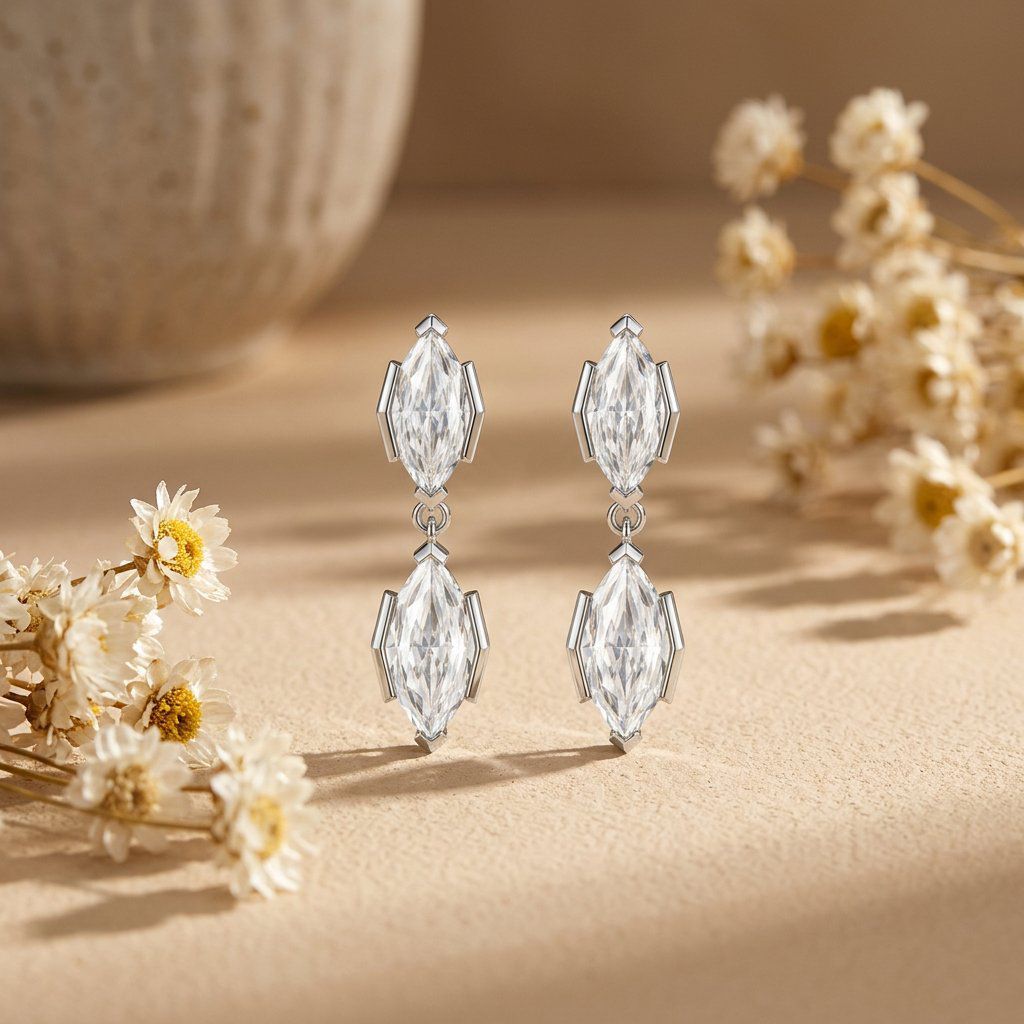
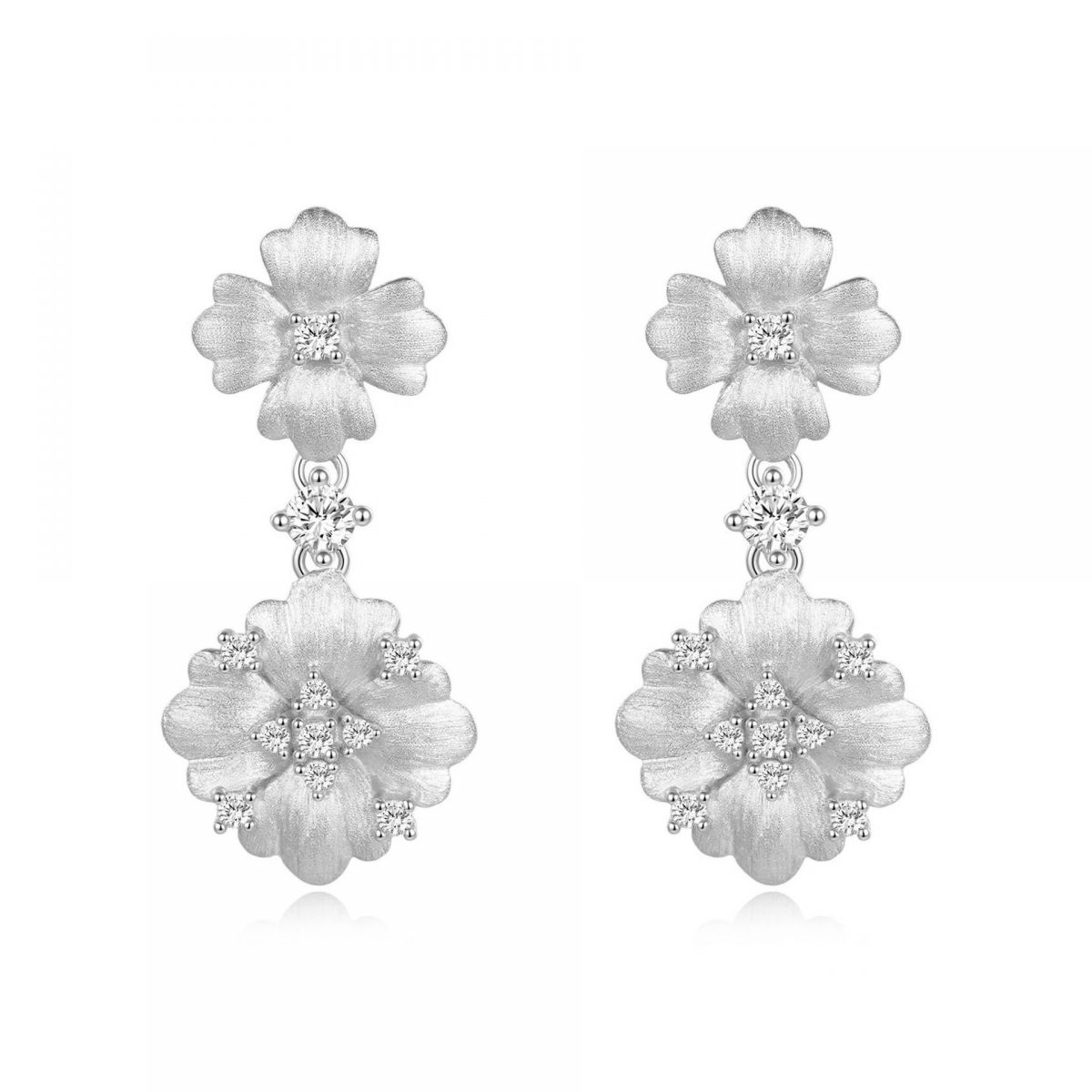
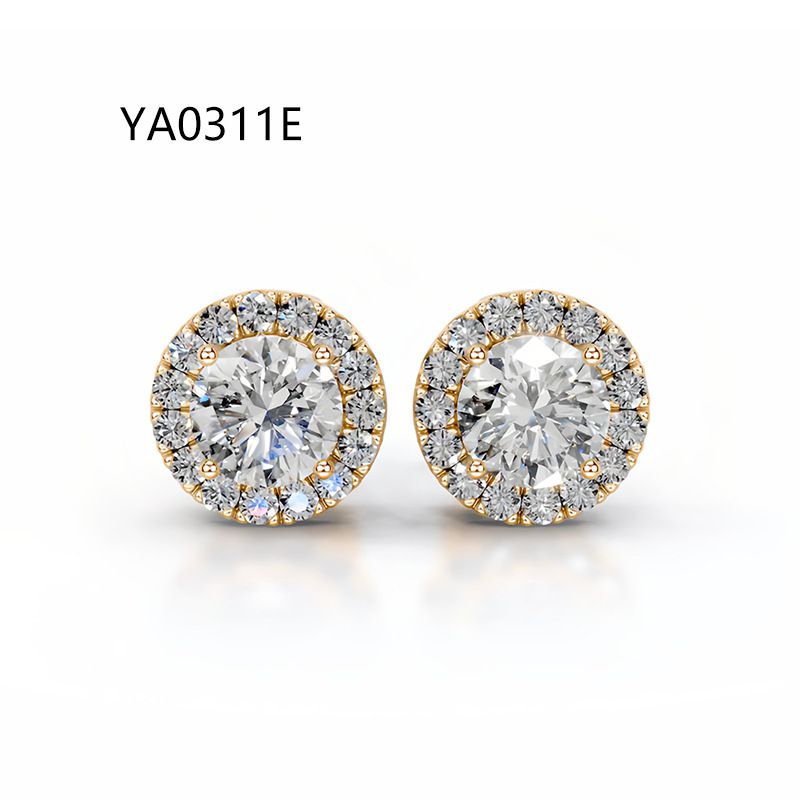
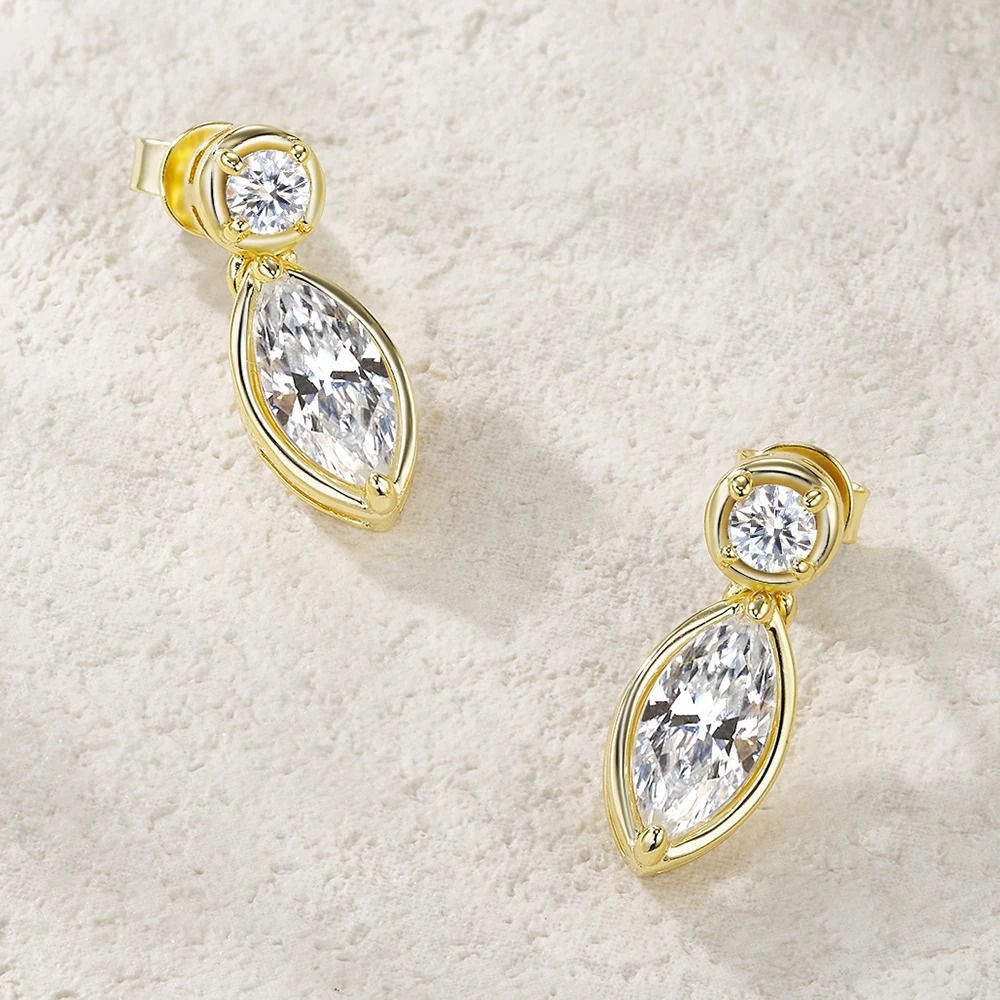
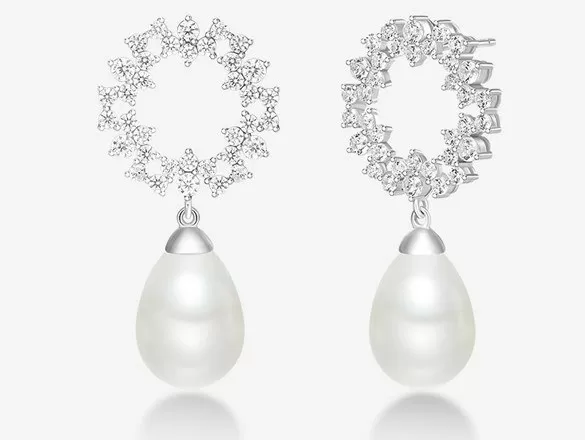
Earrings
Bridal Earrings by Weight: Matching Gram Weight to Retail Price Tiers
Bridal earrings are the most-returned category on a wedding counter, and the reason is almost never the stone. It is the weight. A pair that photographs beautifully on a model with pierced, practiced ears can hurt a real bride by hour three of a twelve-hour wedding day. Wholesale buyers who ignore gram weight end up with a returns problem that eats the margin the earrings were supposed to earn.
The ear has a budget, and it is measured in grams
Average lobes carry roughly three to five grams per ear comfortably through a full day. Past five grams per ear, even healthy lobes start to ache, and pierced ears that have not been heavily worn may struggle past four. Drop earrings are the risk, because the lever arm of the drop multiplies the perceived weight in a way a stud never does. A six-gram chandelier feels heavier than a six-gram stud, even though the scale says the same thing.
The wholesale mistake is buying earrings by carat of moissanite alone. A 2-carat drop in a thin sterling basket can be a joy; a 2-carat drop in a heavy cast frame can be a return. Ask the supplier for the gram weight per pair, not just the stone count.
Three price tiers, three weight envelopes
Build the earring case around three retail tiers, and hold each tier to a weight ceiling.
Entry tier — $29 to $39 retail
This tier sells to bridesmaids, flower-girl moms, and budget-conscious brides who want sparkle without commitment. Build it from thin sterling or rhodium-plated posts, small round moissanite studs or tiny drops, and keep the pair under three grams. Customers at this tier are comparing against fast fashion, and they will return anything that feels heavy or cheap. The win is a pair that looks twice its price.
Core tier — $59 to $79 retail
This is the bride's own earring. Allow drops up to five grams per pair, use secure lever-back or screw-back fittings, and step up to clustered moissanite or a small halo. The weight ceiling still matters: a core-tier bride will wear these earrings from morning prep through the first dance, and an ache at dinner becomes a complaint at the counter.
Premium tier — $99 and up retail
Here is where longer chandeliers, teardrop moissanite, and detailed vintage settings live. Weight can reach six or seven grams per pair, but only if the fitting is a secure lever back and the bride is told in advance. Premium buyers will wear a heavier pair for a few hours; they will not wear it for a full day, and they should not be asked to.
Weight is also a fit conversation
Brides with newly pierced ears, thin lobes, or large drops they intend to wear all day need a different recommendation than the general counter. Offer ear-lobe support patches and post backs alongside the heavier drops, and say out loud which pairs are "ceremony-only" versus "all-day." That honesty builds trust and cuts returns more than any sizing chart.
Metal choice also shifts the weight budget. Solid 14K gold drops are heavier for the same silhouette than sterling, and sterling is heavier than hollow vermeil. For long drops at the core tier, hollow or open-work construction lets you hit the visual size without the gram count. Ask the factory whether the setting is cast solid or open; the answer changes what you can stock.
What to verify at the supplier
Before you place a bulk earring order, request the gram weight per pair, the post gauge, and the closure type. Confirm that heavy pairs ship with reinforced lever backs rather than simple friction posts, and ask whether the supplier can supply ear-support patches as a free add-on. Keep a small spread of earrings in each weight tier so the bride can hold them in her hand before she buys; a pair that feels light on the counter is a pair that feels light on her wedding day.
Photography and the weight problem
One reason bridal earring returns stay high is that studio photography flatters every pair. A chandelier earring photographed on a professional model with a styled earlobe looks like a statement; the same pair on a tired bride at hour ten looks like a weight she cannot wait to remove. Counter the mismatch by photographing your own earrings on a real hand and ear, not on a mannequin, and by posting the gram weight on the product tag. Brides who know the weight going in make better decisions and complain less. The product tag should also note the closure type, because a lever back and a friction post are not the same product even when the stone looks identical.
Stock a few stud-only options as the quiet safety net. Some brides will not wear drops at all, and a counter that only shows chandeliers forces a compromise she will regret. The stud sale is smaller, but it is a sale she will not return, and it pairs cleanly with the pendant and bracelet she buys in the same appointment.
For third-party reference, the Wikipedia article on moissanite details moissanite’s discovery, optical properties and use in jewelry.
Frequently Asked Questions
What ring sizes can you supply in bulk?
US sizes 5–12 including half sizes. Send a size breakdown with your order and we cast to that curve; comfort-fit inner bands reduce resize requests.
Can I order a mixed size run instead of one size?
Yes. Mixed runs are standard for wholesale: specify quantity per size and we pack and label by size at no extra labor cost.
What is the MOQ for custom ring designs?
50 pieces per design for existing molds; 100–300 pieces when a new mold or CAD model is required.
How should I price rings for retail margin?
Most partners use a 3–4x markup on FOB cost for sterling and 2.5–3x for moissanite solos, which keeps landed cost under 30% of retail.
Send your spec sheet — stone, cut, size, plating and quantity — and we will return a costed timeline.
Ask the workshop