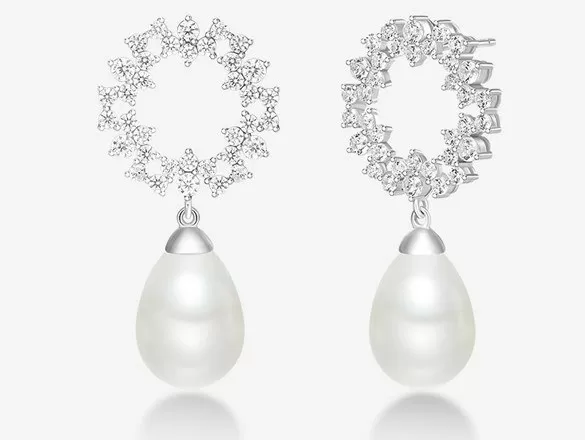
Earrings
Bridal Earrings by Wedding Hairstyle: A Matching Guide
Bridal earrings are one of the few pieces of jewelry that sit directly next to your face, so they have an outsized effect on how you look in photos. But the most beautiful earring falls flat if your hair covers it. The easiest way to choose is to start from your hairstyle, not the earring.
Updos and sleek buns
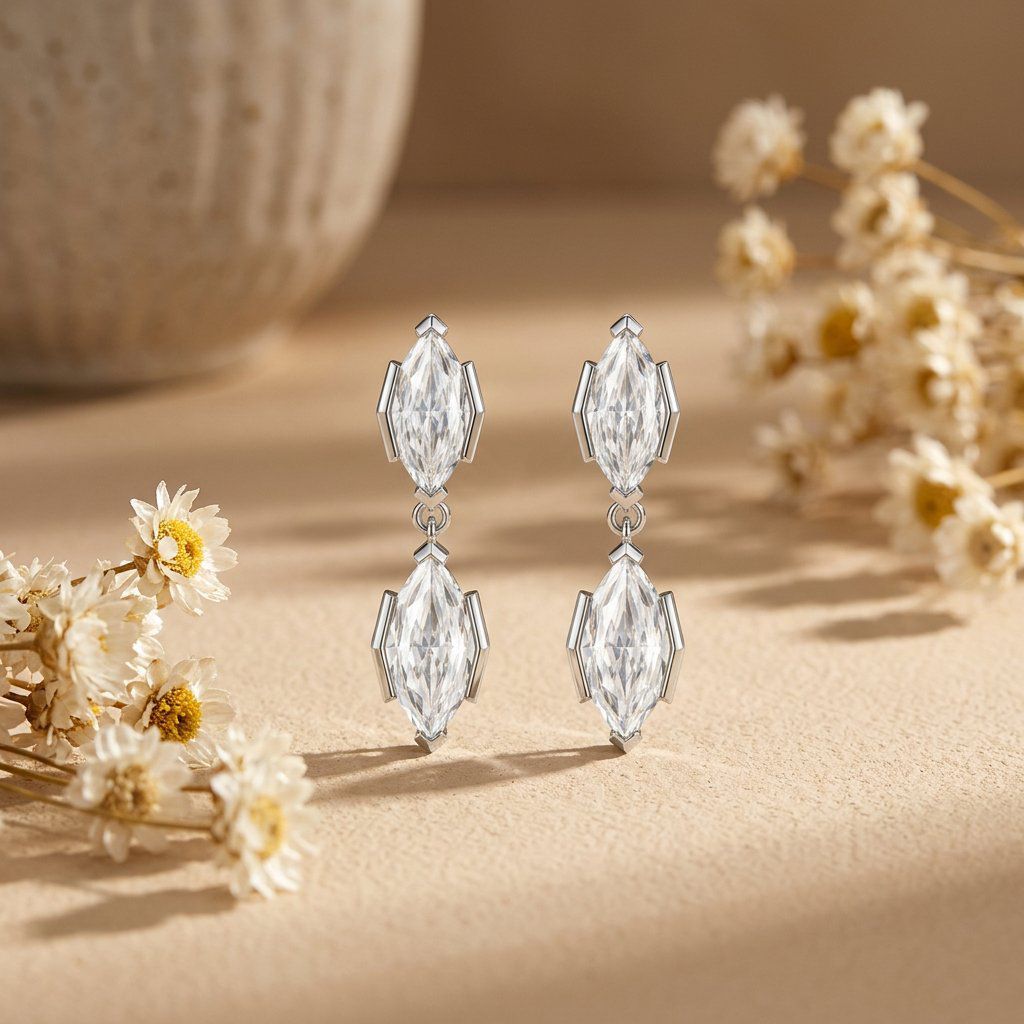
When your hair is swept up, your whole ear and neck are exposed, which means you can wear something dramatic. Drop earrings and chandelier styles shine here, literally and visually. A long linear drop elongates the neck and photographs beautifully, especially from the side. This is the one day where a statement earring earns its place. If you choose bold drops, keep the necklace minimal or skip it so the look stays balanced.
Hair worn down, loose waves, or half-up
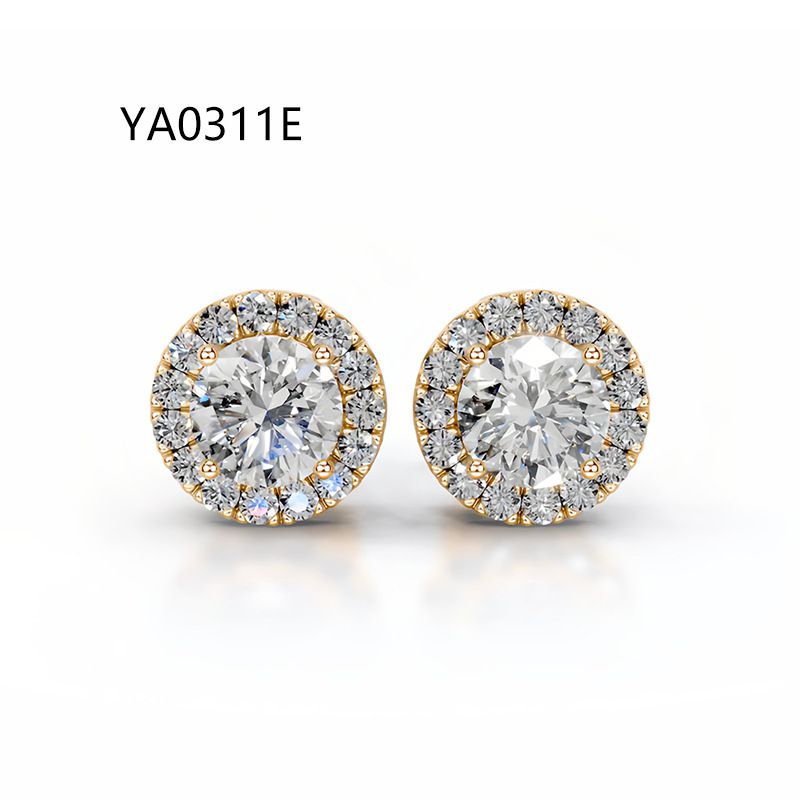
With hair falling around your shoulders, long dangling earrings can disappear into the hair or, worse, tangle. This is the territory of studs and small hoops. A pair of diamond or moissanite solitaire studs is classic and reliable: they peek out from hair with every turn of your head. Small huggie hoops add a soft outline against loose waves. Save the chandeliers for the reception if you want a change.
Side-swept or one-shoulder styles
If your hair is pinned to one side, you have a deliberate asymmetry to work with. You can lean into it with a slightly more detailed earring on the exposed side, or keep both ears in matching studs for symmetry. Many photographers love the way a single drop catches the light against swept hair. If your gown has a one-shoulder or asymmetric detail, mirroring that in your jewelry feels intentional.
Veils and hairpieces change the math
A veil attached at the crown or a crystal hair comb adds visual weight near the face. When your hair already carries sparkle, choose quieter earrings so the whole look does not compete. A general rule: one hero piece near the face. Either the hairpiece or the earrings take the spotlight, not both.
Comfort matters for a long day
Wedding days are long, and heavy earrings pull. If you are drawn to a substantial drop, check the weight early. Posts with secure backs, and ideally a clutch or screw back on heavier pieces, keep everything in place through a ceremony, photos, and dancing. Try the earrings on with your hair trial and wear them for an hour at home to feel the weight before the day itself.
Matching the rest of your set
Coordinate your earrings with your engagement ring and necklace. A consistent metal color across your pieces reads polished in photos. If your engagement ring is a solitaire, matching solitaire studs echo it beautifully. Moissanite studs give you the same bright look at a comfortable price, which is why they are a perennial bridal favorite.
Studs, drops, and hoops at a glance
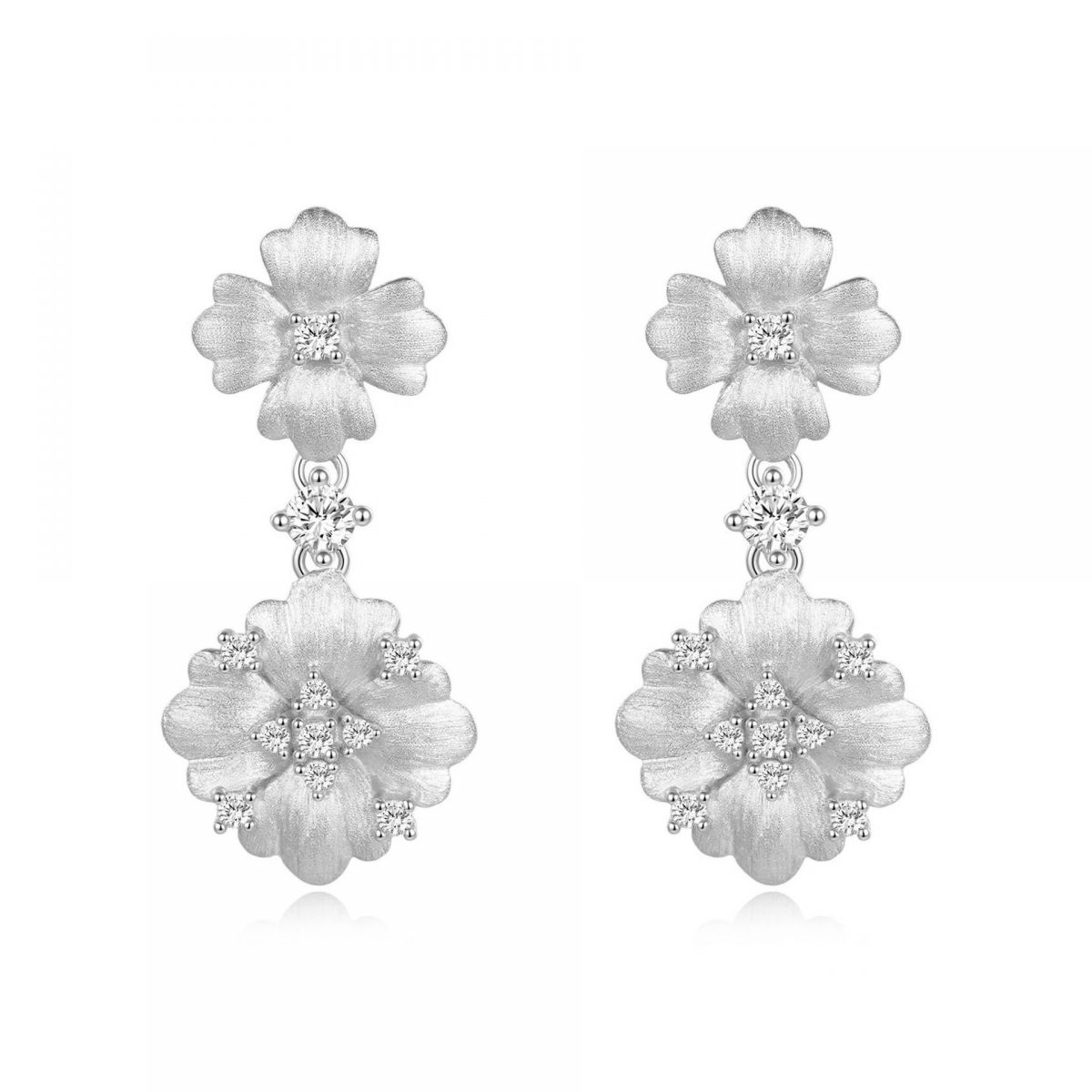
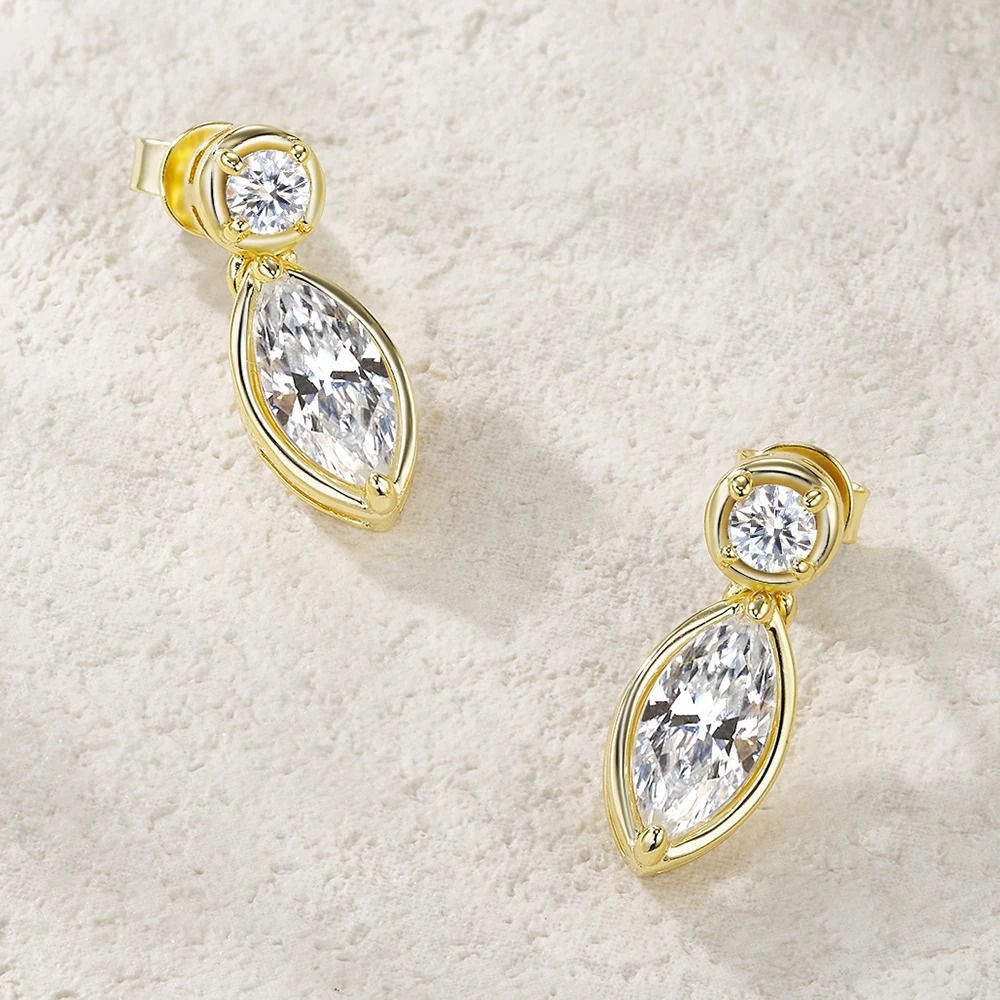
Three earring silhouettes cover most bridal choices. Solitaire studs are the safe, timeless option: a single diamond or moissanite that brightens the face without fighting anything else. They suit almost every hairstyle and dress. Drop and chandelier earrings add length and glamour, and they earn their keep when your ears and neck are on show, mainly with updos. Small hoops or huggies sit in the middle: softer than studs, gentler than chandeliers, and a good match for loose waves or a modern gown. If you are torn between two looks, studs for the ceremony and a switch to drops for the reception is a common, practical plan.
Keeping earrings secure all day
The back matters as much as the front. Butterfly backs are fine for light studs, but a heavier drop should sit on a screw back or a locking clutch that will not work loose as you hug, dance, and turn your head for photos. Check each back the morning of the wedding, and pack the pair of spare backs in your clutch. A pair of earrings you love is ruined the moment one drops onto a dance floor. Browse secure, bridal-weight pairs in our earrings collection, and match the stone and metal to your pendant and necklace so the whole set reads as one.
What to bring to your hair trial
A hair trial is the ideal moment to test your earrings, not just your updo. Bring the actual pair you plan to wear, or a similar weight and drop length, and clip them in while the stylist works. You will see at once whether a long drop disappears into pinned hair or frames the jaw the way you hoped. This is also the moment to notice whether the earring clashes with your veil comb or hair pins, so you are not discovering it on the morning of the wedding. A ten-minute test now prevents a day-of change you cannot undo.
The goal is earrings that photograph well and feel effortless all day. Match the scale of the earring to how much of your ear your hair reveals, and you cannot go wrong. Bring both a stud pair and your statement pair to your fitting if you are unsure, and let the camera help you decide.
For third-party reference, the Wikipedia article on moissanite details moissanite’s discovery, optical properties and use in jewelry.
Frequently Asked Questions
What ring sizes can you supply in bulk?
US sizes 5–12 including half sizes. Send a size breakdown with your order and we cast to that curve; comfort-fit inner bands reduce resize requests.
Can I order a mixed size run instead of one size?
Yes. Mixed runs are standard for wholesale: specify quantity per size and we pack and label by size at no extra labor cost.
What is the MOQ for custom ring designs?
50 pieces per design for existing molds; 100–300 pieces when a new mold or CAD model is required.
How should I price rings for retail margin?
Most partners use a 3–4x markup on FOB cost for sterling and 2.5–3x for moissanite solos, which keeps landed cost under 30% of retail.
Send your spec sheet — stone, cut, size, plating and quantity — and we will return a costed timeline.
Ask the workshop