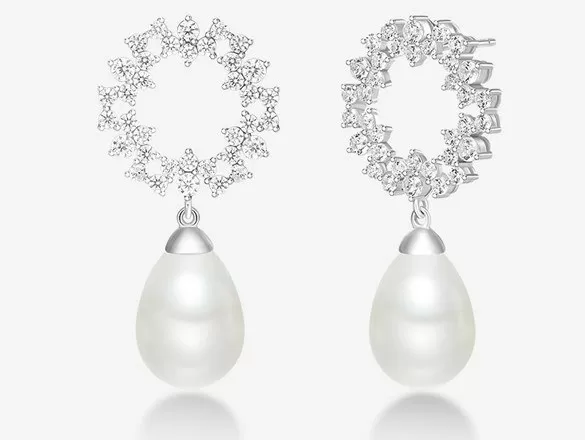
Earrings
Which Bridal Earrings to Stock for Every Wedding Hairstyle
Bridal earrings sell in the fitting room, not the glass case. A bride trying on a gown will touch her lobes, look in the mirror, and ask the associate what she should wear. If your case only carries one silhouette, you are leaving the upsell on the table and sending her to a competitor who can show her options against her actual hair and gown. The most useful way to organize a bridal earring wall is by the hairstyle the bride will actually be wearing on the day.
Price tiers that match the hairstyle
Not every hairstyle justifies the same price point. The chignon bride, whose earring is the main accessory against a bare neckline, will spend more because the piece is visible in every formal portrait. The loose-waves bride, whose earring is partly hidden, is more price-sensitive and will accept a sterling or vermeil piece. The short-crop bride, who wears the earring every day after the wedding, will step up to 14k gold because the piece has a longer lifetime value. Use these price sensitivities to set the bridge tier per silhouette rather than applying one flat price across the wall. A $350 chandelier on a short-crop bride sells; the same piece on a loose-waves bride collects dust.
The four hairstyles that decide 90 percent of sales
Across bridal clients, four hairstyles dominate: the low chignon or French twist, the half-up half-down, loose waves worn fully down, and the pixie or short crop. Veils and hairpieces sit in or on top of these styles, which changes what the earring needs to do. A chignon exposes the full lobe and jawline, so a drop that swings along the neckline reads beautifully. Half-up styles hide the upper lobe but leave the lobe and lower ear exposed, which favors a stud with a small drop that starts at the piercing point. Loose waves worn down bury the earring entirely unless it is deliberately long and linear. Short crops show the whole ear, so a cluster or halo stud reads as the statement piece.
Stocking depth per silhouette
For a mid-size boutique, carry two price tiers per hairstyle. At the entry tier, a sterling silver or vermeil piece under $120 retail covers the bride who is spending most of her budget on the gown and venue. At the bridge tier, 14k gold with moissanite climbs to $250 to $450 retail and covers the bride who wants her earrings to be the jewelry she re-wears to anniversaries. One style per silhouette per tier is enough; the mistake buyers make is carrying twelve variations of the same teardrop drop and nothing for the pixie-cut bride.
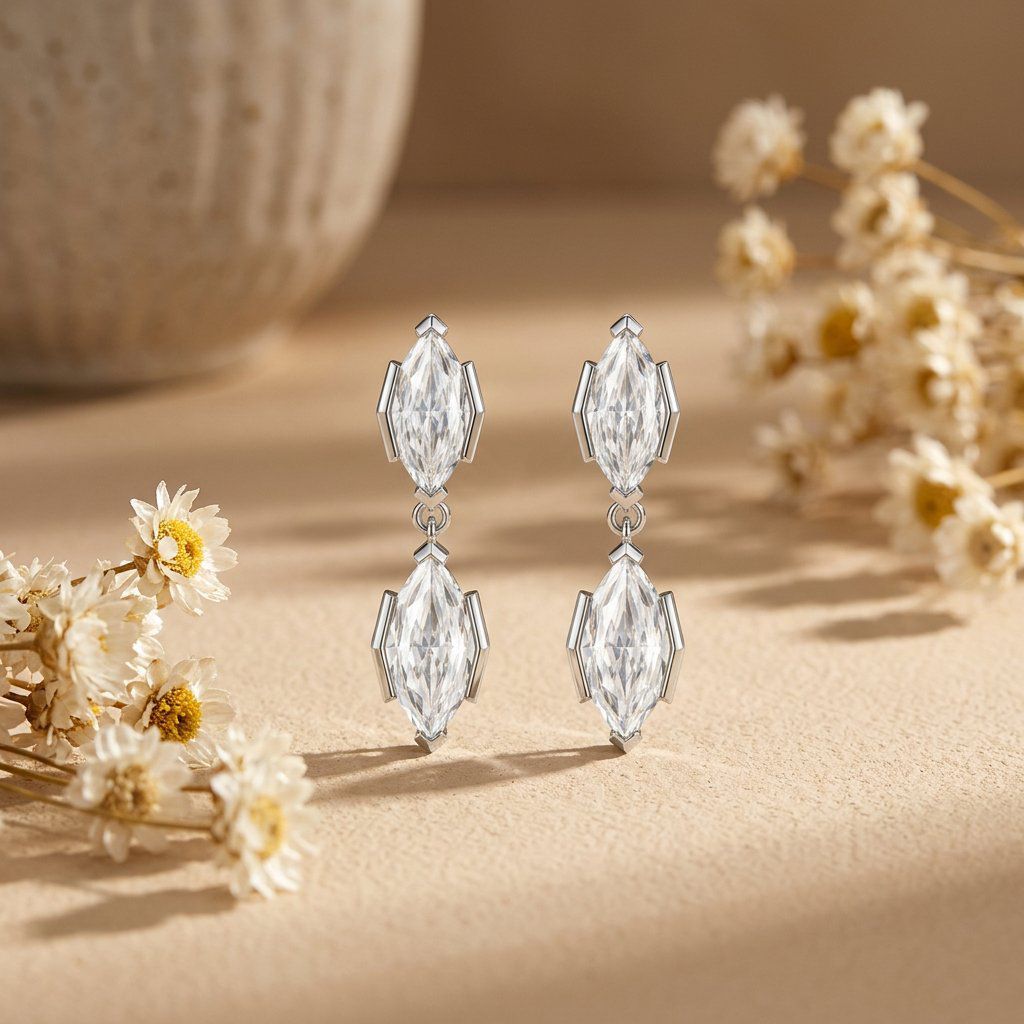
- Chignon / French twist: linear drops 25 to 45mm long, slender, on fish hooks or lever backs. These catch light when the bride turns her head during vows.
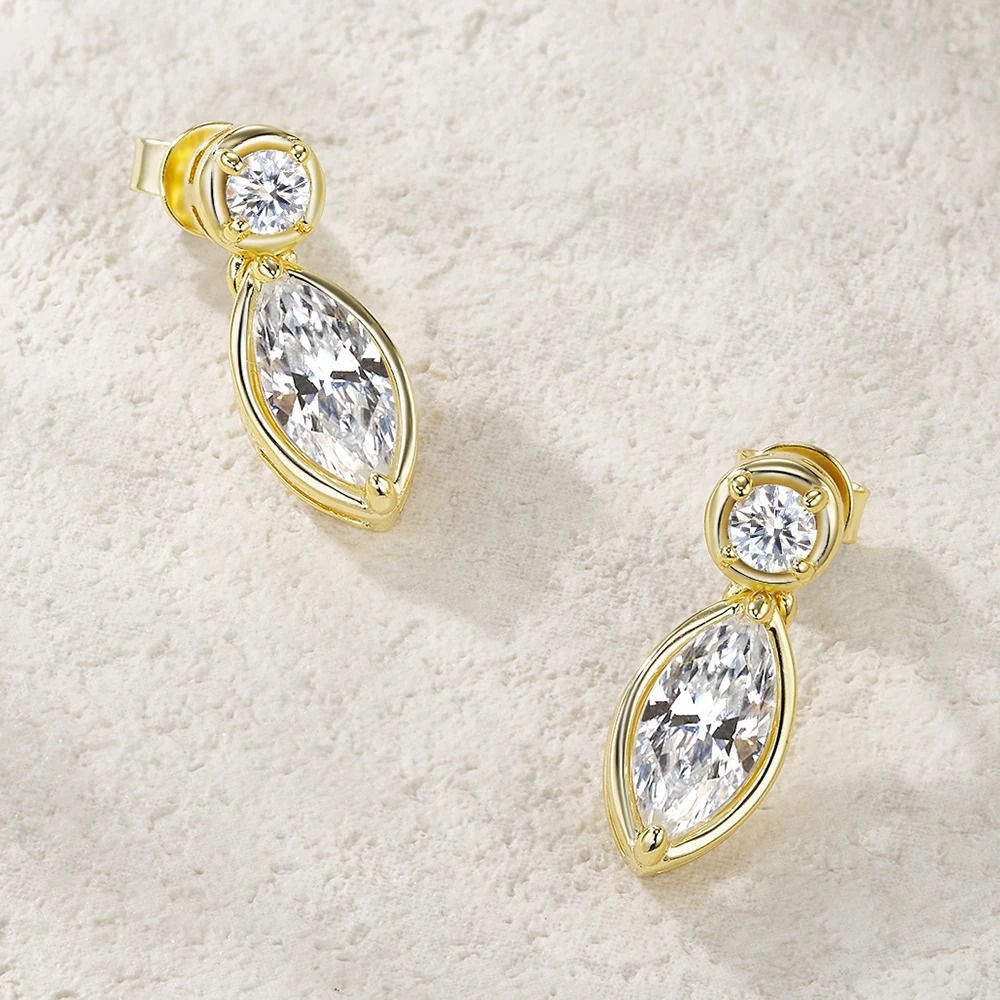
- Half-up: stud-plus-small-drop hybrids, 12 to 20mm total length, so the piece starts at the piercing and does not fight the hair.
- Loose waves down: long linear or fringe drops 50 to 70mm, deliberately visible past the hairline. Avoid small studs here; they vanish.
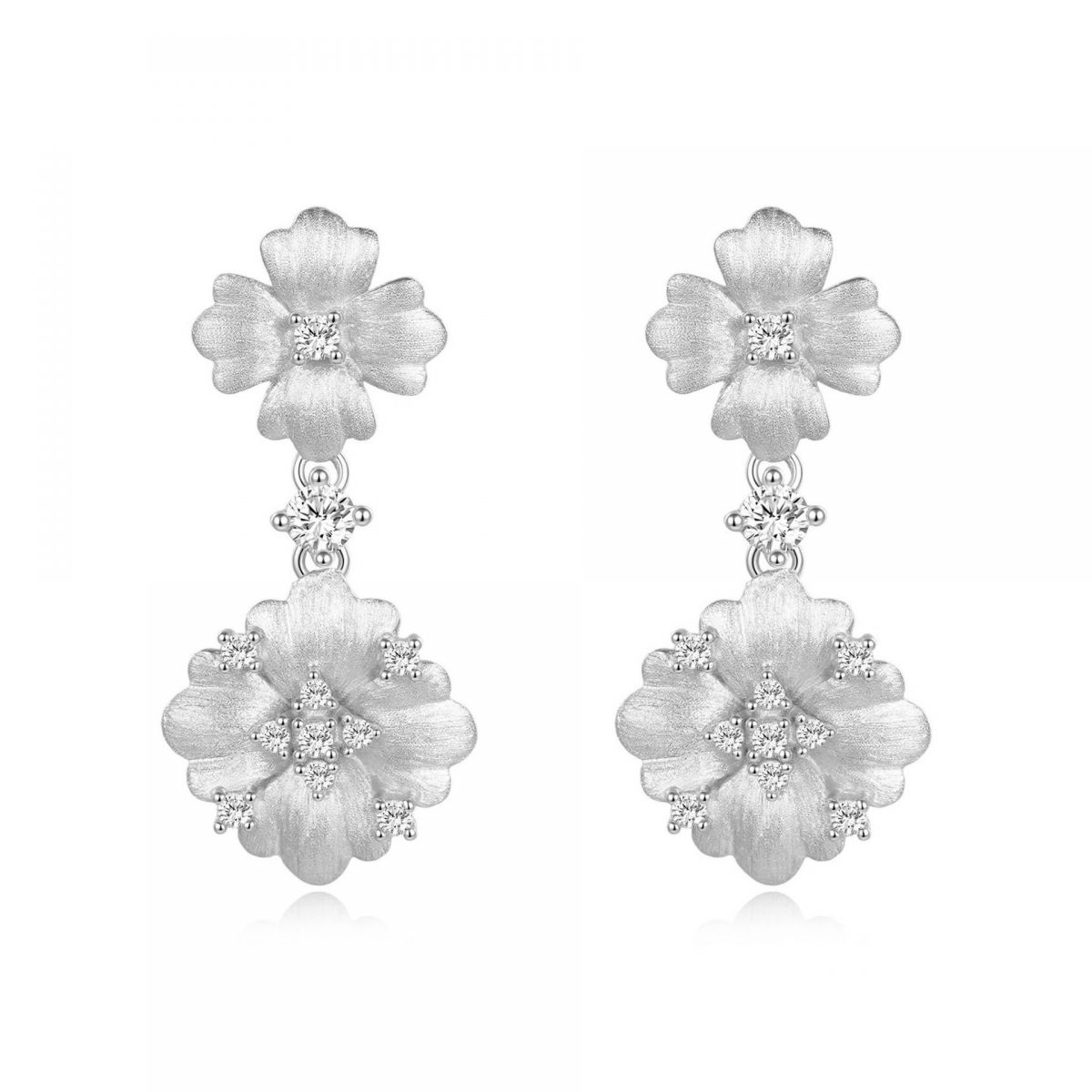
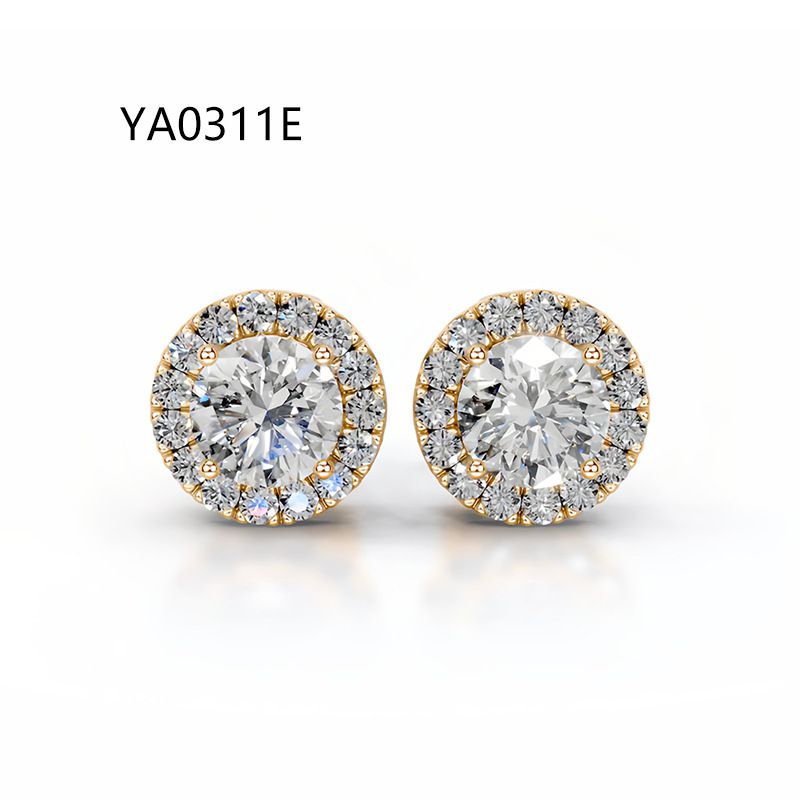
- Short crop: halo clusters or chandelier studs 15 to 25mm, which read as the statement on an exposed ear.
Veils and hairpieces shift the plan
A veil comb or a side crystal hairpiece changes the equation. If the bride is wearing a veil at the back of the head, an earring with a long drop competes with nothing and can lean dramatic. If she is wearing a side hairpiece or a fascinator, pull the earring back to a stud so she does not read as over-accessorized on one side. This is the conversation your associate should be having in the fitting room, and it is why a stocked earring wall organized by hairstyle converts better than a wall organized by price.
What to ask your supplier
When you reorder, ask for matching stud-and-drop pairs that can be sold as one set or broken apart. Brides will often buy the drop for the ceremony and keep the stud for everyday wear after the wedding, which doubles the lifetime value of the SKU. Confirm the ear wires are surgical steel or 14k, because sensitive ears are a common bridal-day complaint. our moissanite earring range is photographed on models with each of the four hairstyles above, so your staff can point to a reference instead of describing a silhouette.
Stocking by hairstyle turns the earring wall from a display into a fitting-room tool, and the conversion rate on a wall organized this way is noticeably higher than one organized by price alone. Train associates to ask the bride, in the first minute, how she plans to wear her hair on the day; the answer narrows the wall to two options and closes the sale in minutes. Brides rarely know their own hairstyle vocabulary, so offering the four named styles helps them choose quickly.
Independent background on moissanite — how its hardness and refractive index compare with diamond — is documented in the Wikipedia article on moissanite.
Frequently Asked Questions
What ring sizes can you supply in bulk?
US sizes 5–12 including half sizes. Send a size breakdown with your order and we cast to that curve; comfort-fit inner bands reduce resize requests.
Can I order a mixed size run instead of one size?
Yes. Mixed runs are standard for wholesale: specify quantity per size and we pack and label by size at no extra labor cost.
What is the MOQ for custom ring designs?
50 pieces per design for existing molds; 100–300 pieces when a new mold or CAD model is required.
How should I price rings for retail margin?
Most partners use a 3–4x markup on FOB cost for sterling and 2.5–3x for moissanite solos, which keeps landed cost under 30% of retail.
Send your spec sheet — stone, cut, size, plating and quantity — and we will return a costed timeline.
Ask the workshop