Bracelets & Bangles
Wearing a Tennis Bracelet on Your Wedding Day
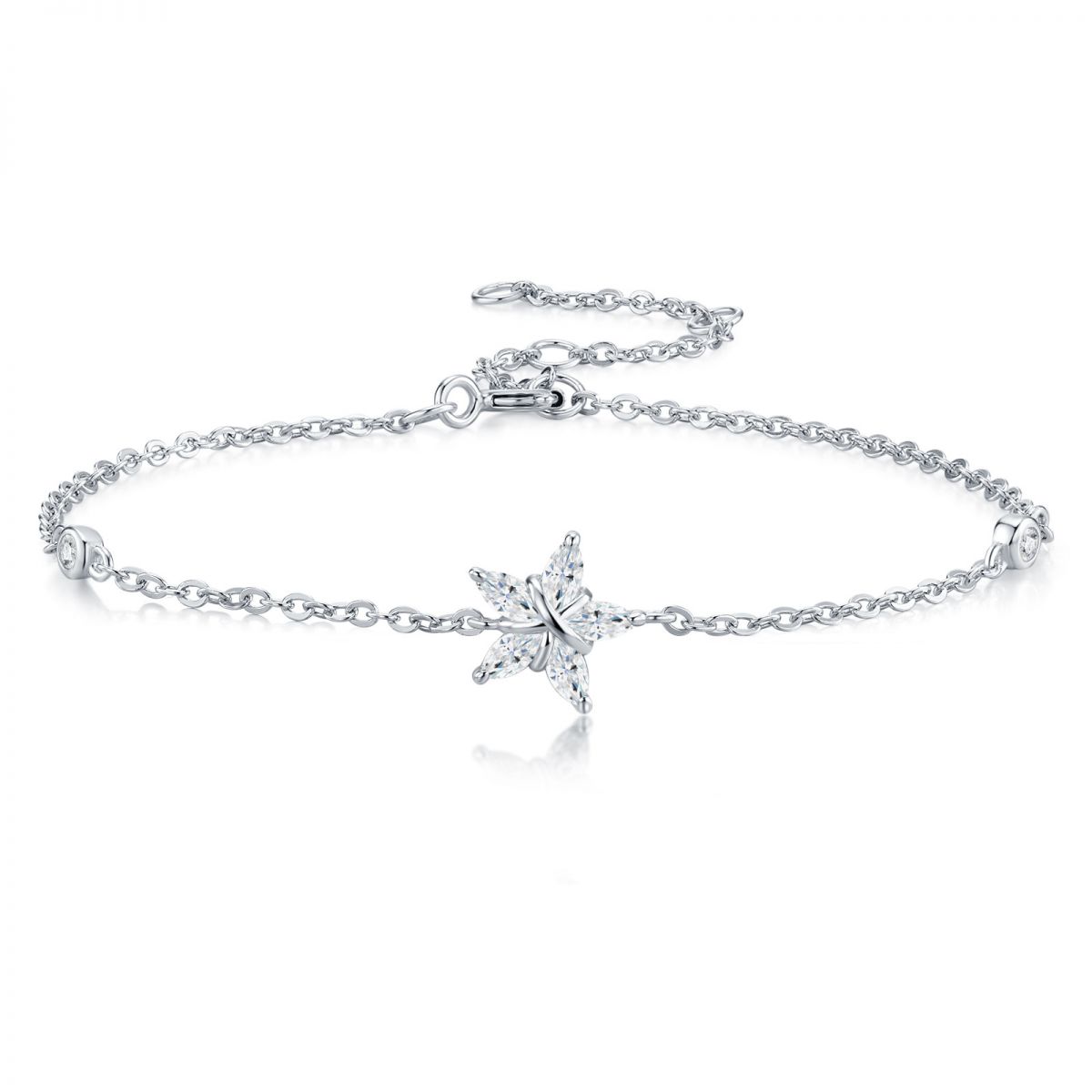
Few bridal accessories feel as elegant as a fine tennis bracelet. That continuous line of stones catching light down the wrist is the kind of detail that photographs beautifully and never looks dated. But on a wedding day, you are already wearing an engagement ring, a wedding band, earrings, and often a veil, so a bracelet needs to be placed deliberately rather than added on top of everything.
Which wrist should it go on?
The common convention is to wear the tennis bracelet on your right wrist, leaving your left hand clean to showcase the engagement and wedding rings. This keeps the focus on the hand you will be photographed holding up during the ring exchange, and it avoids a crowded wrist where the bracelet, engagement ring, and band all compete. If you are left-handed or simply prefer it the other way, wear it where it feels natural; the convention is a guideline, not a rule.
Getting the size right
A standard tennis bracelet is around 7 inches, but wrists vary. The bracelet should move a little when you flex your hand, not pinch the skin or slide far up your forearm. A properly fitted bracelet lets you slip one finger underneath when it is fastened. Because a tennis bracelet is only as secure as its clasp, the right fit also means it will not slide around and catch on fabric. If you are between lengths, choose the shorter option and add an extender rather than wearing something loose.
Sleeve details matter
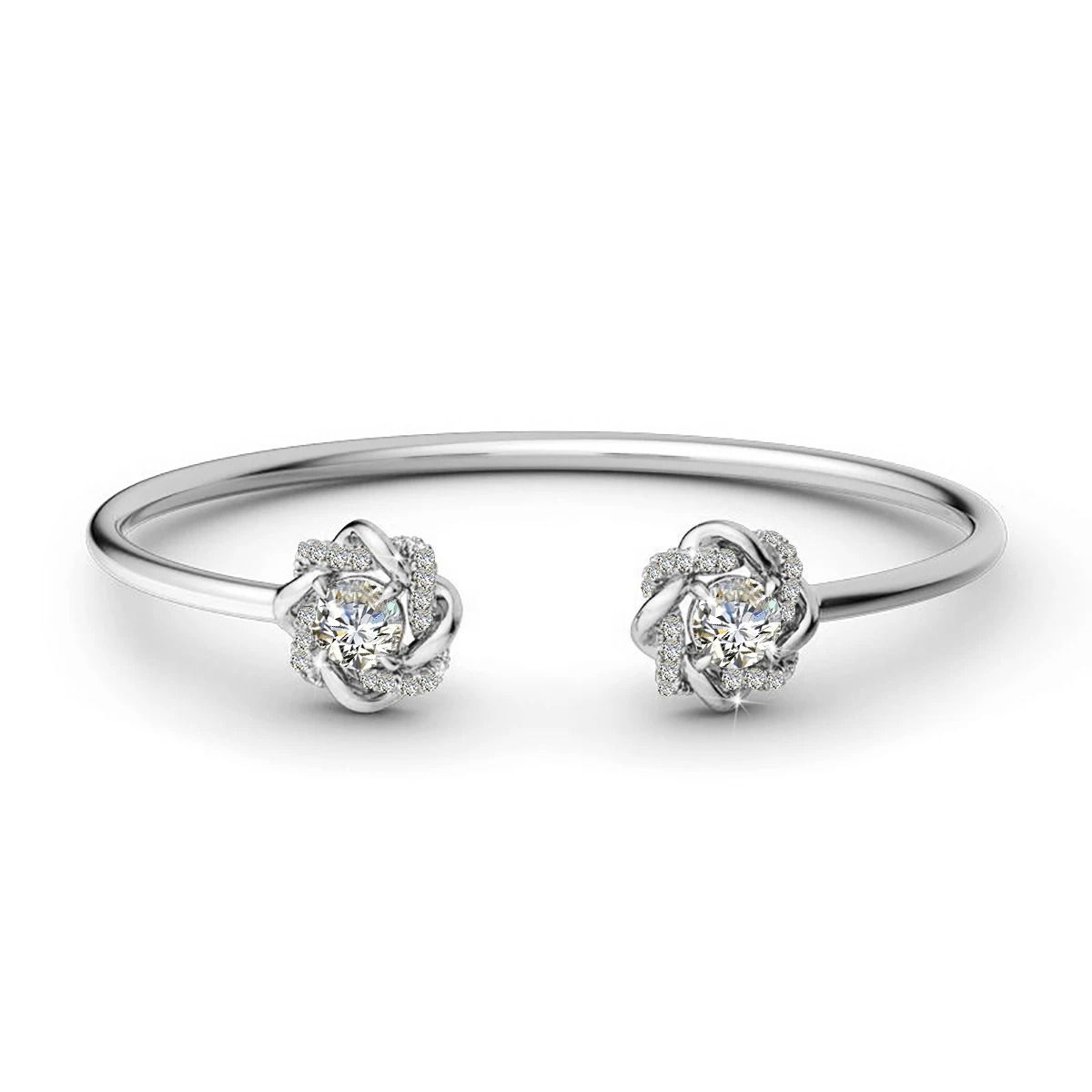
Look at your gown's sleeve. A strapless, sleeveless, or spaghetti-strap dress gives the bracelet a clear stage. Long fitted sleeves, lace cuffs, or heavily beaded wrists can hide the bracelet entirely or catch on the stones. If your gown has detailed sleeves, you may prefer to skip the bracelet and lean on earrings instead. A slim bracelet also sits more comfortably than a wide bangle under a sleeve, so delicate usually wins on a wedding day.
Match the metal and stone
Coordinate the bracelet with your ring set. A white gold or platinum tennis bracelet pairs naturally with a white metal engagement ring. Yellow or rose gold works if your set is warm-toned. A moissanite tennis bracelet delivers the same continuous sparkle as a diamond line at a far more approachable price, which is why it is such a popular choice for brides who want the look without the spend.
Do not skip the clasp check
A tennis bracelet is only as safe as its closure. Look for a box clasp with a figure-eight or double safety latch, which is far more secure than a simple clasp. Before the wedding day, fasten and unfasten it yourself a few times so you are not fighting it while getting ready. Check that every stone setting feels tight, and consider having a jeweler inspect it if the bracelet has been in a drawer for a while.
When to add, when to leave it off
If your dress is already rich with beading, a bracelet can push the look into too-much territory. In that case, let a simple pair of studs and your rings carry the day. If your gown is clean and minimal, a tennis bracelet adds exactly the refined sparkle an elegant silhouette needs. It is the rare accessory that works with both a ballgown and a slip dress, which is why it has stayed bridal for decades.
Delicacy versus statement
Tennis bracelets range from a fine line of 1.5mm stones to a bolder 3mm row, and the scale you pick changes the mood. A delicate 1.5 to 2mm line is the classic bridal choice: it glints but never competes with a detailed gown. A 2.5 to 3mm row reads as more modern and architectural, and it pairs beautifully with a simple slip dress or a sleek sheath. On a wedding day, lean delicate unless your dress is very plain, because the bracelet shares the wrist with a bouquet, a groom's arm, and photographs of you holding hands. Too much stone on the wrist reads busy in close-up.
Wearing it after the wedding
A tennis bracelet is not a one-day piece. Its quiet sparkle works at work, at dinners, and on anniversaries, which is part of why it earns its place in a bridal wardrobe. Keep it matched to the rest of your set, store it in its own pouch so the stones do not scratch other pieces, and have the clasp checked at the same time you get your ring cleaned. Explore the range in our bracelets and bangles collection, and pair the look with a matching pendant if you want a coordinated set for the reception.
Try the bracelet on with your dress at your fitting, fasten it the way you would on the day, and move your arm through the motions of hugging, holding hands, and raising a glass. If it stays comfortable and visible, it has earned its place on your wrist.
Independent background on moissanite — how its hardness and refractive index compare with diamond — is documented in the Wikipedia article on moissanite.
Frequently Asked Questions
What ring sizes can you supply in bulk?
US sizes 5–12 including half sizes. Send a size breakdown with your order and we cast to that curve; comfort-fit inner bands reduce resize requests.
Can I order a mixed size run instead of one size?
Yes. Mixed runs are standard for wholesale: specify quantity per size and we pack and label by size at no extra labor cost.
What is the MOQ for custom ring designs?
50 pieces per design for existing molds; 100–300 pieces when a new mold or CAD model is required.
How should I price rings for retail margin?
Most partners use a 3–4x markup on FOB cost for sterling and 2.5–3x for moissanite solos, which keeps landed cost under 30% of retail.
Send your spec sheet — stone, cut, size, plating and quantity — and we will return a costed timeline.
Ask the workshop