Bracelets & Bangles
Pearl Bracelets for Brides: The Wedding-Day Classic
When brides picture their wedding-day jewelry, the wrist is often the last place they plan. Yet a single pearl bracelet can be the piece that pulls the whole look together-soft, luminous, and quiet enough not to compete with the ring. Pearls on the wrist have been a bridal staple for decades, and the modern versions range from a delicate single strand to a glittering pearl-and-diamond line. Here is how to choose one that feels complete rather than crowded.
Why a pearl bracelet works on a wedding day
Pearls catch light differently than diamonds. They glow from within, casting a warm sheen against skin and white fabric. On a wedding day, that softness photographs beautifully-especially when the bride holds a bouquet, exchanges rings, or raises a glass. A pearl bracelet also bridges generations: it can be a borrowed "something old" from a mother or grandmother, or a new gift from a partner. That emotional flexibility makes it more than an accessory.
Unlike a diamond tennis bracelet, a pearl strand reads less flashy and more romantic. If your gown is simple, pearls add elegance without sparkle overload. If your gown already carries beading, a single pearl strand adds texture without adding more shine.
The main styles
Three pearl bracelet silhouettes dominate bridal wear:
- Single strand. A classic line of uniform round pearls strung on silk. This is the most traditional choice, elegant with any gown.
- Pearl and diamond line. Alternating pearls with small diamonds or moissanite, sometimes called a pearl tennis bracelet. It adds sparkle while keeping the soft pearl base.
- Stretch or stretch-style pearl. A flexible strand that slides on easily, popular for a more relaxed, modern bride.
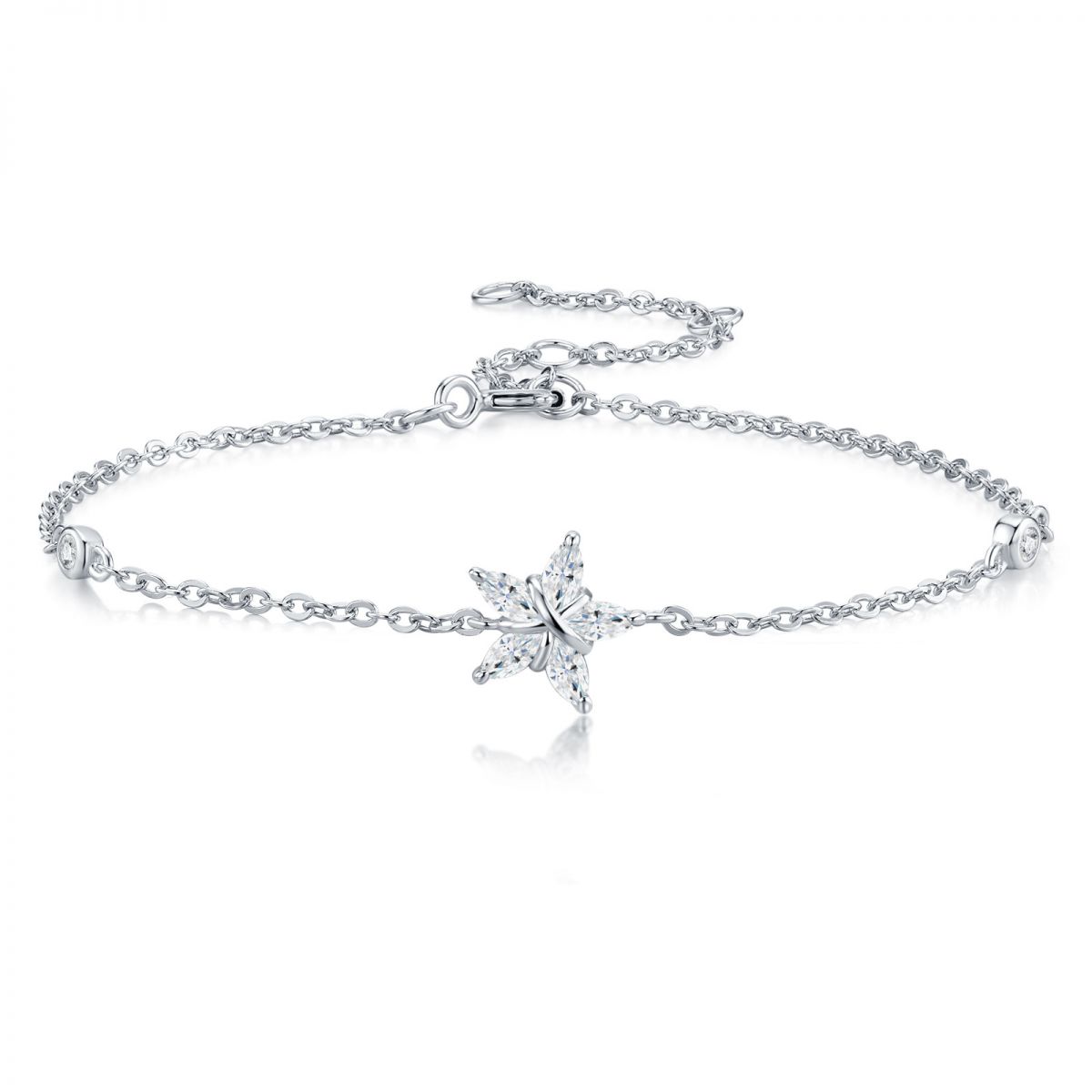
- Bracelet with a single focal pearl or diamond. A thin chain with one larger pearl drop, delicate and understated.
If you love the look of a line bracelet but prefer all-diamond sparkle, our guide to the tennis bracelet on the wedding day offers an alternative. The choice between pearls and diamonds often comes down to whether you want warmth or fire on the wrist.
Sizing and fit
A pearl bracelet should sit comfortably without sliding around the wrist. Measure your wrist where a watch would sit, then add roughly a quarter inch for a snug bridal fit, or a half inch for a looser drape. Silk-strung pearls should not be so tight that they pinch, but they also should not flip around constantly. Many brides prefer a slightly looser fit on the wedding day, since hands tend to swell during a long, warm event.
Check the clasp. A lobster clasp is secure and easy to manage alone; a spring ring is daintier but harder to fasten with wet or nervous hands. If you plan to put the bracelet on yourself on the morning of the wedding, practice beforehand or ask your attendant to help. For broader wrist-fit advice, our bracelet sizing guide applies to pearl strands too.
Stacking with other bridal pieces
The wedding ring hand is usually the left wrist, which means a bracelet on that wrist sits near the engagement and wedding rings. Keep the pairing clean: a slim pearl strand next to a ring reads elegant, while a thick bangle stacked with a wide band looks busy. If you wear a watch, consider moving it to the other wrist for photos so the bracelet and ring can shine.
On the right wrist, you have more freedom. Many brides layer a pearl bracelet with a thin gold bangle or a delicate chain for a modern stacked look. Our overview of stackable bracelet trends shows how the layering aesthetic works-just keep the pearl as the anchor and let the other pieces stay slim.
Caring for a wedding pearl bracelet
Pearls are soft and porous. Hairspray, perfume, and self-tanner can dull their luster over time. On the wedding day, put the bracelet on last, after makeup and hairspray are dry. After the event, wipe it gently with a soft cloth and store it flat in a fabric pouch, away from harder jewelry that can scratch it. Silk strands loosen over years, so have the bracelet restrung periodically if you plan to keep it as a heirloom.
A pearl bracelet is the kind of piece you will recognize in your wedding photos for decades. It adds warmth to the wrist, echoes the romance of the day, and often becomes the jewelry you reach for again on anniversaries and formal nights. Choose it once, care for it gently, and it stays with you as long as the ring does.
Choosing a pearl bracelet as a gift
A pearl bracelet is a classic gift from a partner, parent, or bridal party, and it carries more sentiment than most wrist pieces. If you are giving one, consider having it engraved inside the clasp or paired with a small charm that marks the wedding date. Freshwater pearls offer the most flexibility at mid-range budgets, while Akoya pearls give that unmistakably round, high-luster look. Either way, present it in a fabric pouch rather than a hard box, so the bride can slip it on easily on the morning of the wedding without fumbling with clasps while her hair is being styled.
For third-party reference, the Wikipedia article on moissanite details moissanite’s discovery, optical properties and use in jewelry.
Frequently Asked Questions
What bracelet materials sell best for wholesale?
316L stainless steel and 925 sterling silver. Steel is price-stable and tarnish-resistant; silver captures the gift segment at a higher ticket.
Do you offer mixed-material stacking sets?
Yes. Stacking sets of two to five bands are assembled and packed as a single SKU, which raises average order value without extra inventory.
How do I handle sizing for bracelets?
Bracelet sizing is forgiving: 7 inch fits most women and 8 inch most men. Offer both and note the measurement in your listing.
What is the MOQ and lead time?
50 pieces per design, samples 3–5 days, bulk 15–20 days.
Send your spec sheet — stone, cut, size, plating and quantity — and we will return a costed timeline.
Ask the workshop