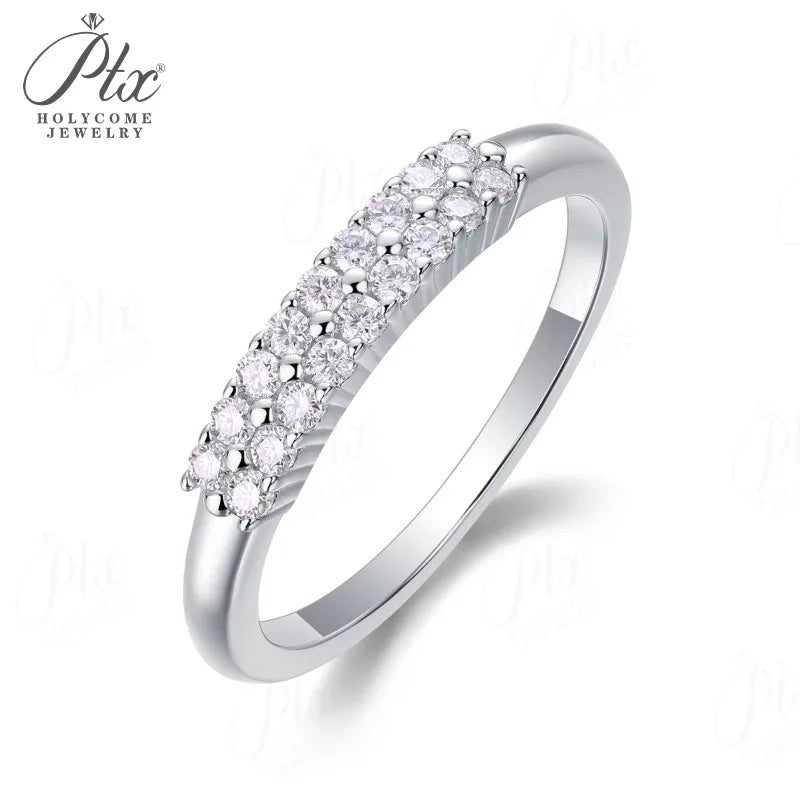
The engagement ring gets the attention, but the wedding band is what makes the bridal set look intentional. A band that matches the height, tone, and profile of a solitaire or halo turns two separate rings into one cohesive look. A band that clashes leaves a visible gap, fights the halo, or makes the center stone look smaller. For independent jewelers selling factory-direct moissanite and 925 sterling silver bridal sets, understanding how to pair bands correctly is a core retail skill. Here is the framework.
Start With the Engagement Ring Profile
Before you discuss band style, identify the center ring. The two most common shapes are the solitaire and the halo, and each wants a different band approach.
Solitaire engagement rings
A solitaire has a single center stone on a clean shank. Because there is no surrounding stone, the band is free to be bolder. A straight pavé band, a plain comfort-fit band, or a contoured band all work. The main decision is height: the band should meet the solitaire shank at the same level so the rings sit flush rather than one riding high. A solitaire on a high cathedral setting actually creates room for a straight band to slide beneath it, which gives you more styling flexibility.
Halo engagement rings
A halo surrounds the center stone with a ring of smaller stones. The halo setting often sits higher and has prongs or a metal rim that a straight band will collide with. Halo sets usually need a contoured, V-shaped, or notched band that dips around the halo. A straight band pressed against a halo either leaves a gap or pushes the halo setting outward. When you wholesale halo bridal sets, confirm the band was designed for that exact halo, not a generic curve. Double halos, which are wider and taller, are especially demanding on band curvature.
Metal Tone and Finish Must Match
One of the fastest ways to make a bridal set look cheap is mixing tones that do not match. If the engagement ring is white-rhodium plated 925 silver, the wedding band must be the same white plating. The same applies to rose-gold and yellow-gold plating. Sterling silver is an affordable base, but plating wears and ages, so consistent plating thickness across the set matters. Ask your wholesale supplier whether the engagement ring and band are plated in the same run, and avoid mixing a bright white band with a slightly grey-toned solitaire.
Finish is the other half of the equation. A high-polish engagement ring paired with a matte band reads as mismatched. Choose the same finish, or deliberately contrast it as a styled look rather than by accident. When in doubt, matching finish always photographs better and ages more gracefully as the plating wears evenly on both rings.
Band Width and Proportion
Proportion is what separates a curated bridal set from a stacked-on combo. As a general retail guide:
- Delicate solitaires (under 2 mm shank) pair best with slim 1.5 to 2 mm bands so the center stone stays the focal point.
- Medium solitaires (2 to 3 mm) balance with 2 to 3 mm pavé or plain bands.
- Larger halos and three-stone settings can carry wider 3 to 4 mm bands or a double-band wrap.
The goal is that the band supports the ring, not competes with it. A band that is too wide makes a modest solitaire look cramped; a band that is too thin makes a bold halo look unfinished. When you are unsure, err on the slimmer side, since a narrow band almost always reads as elegant while a heavy band overwhelms.
Flush Fit vs. Gap Fit
Not every gap is a defect. A small, deliberate gap between the band and a high-set solitaire can look elegant and protects the prongs. A large, unintended gap looks like a mistake. When you present a set to a customer, point out whether the fit is flush or intentionally spaced. If the customer wants a flush fit, a contoured band is the answer; if they like the airy look of a floating band, a straight slim band works. Either way, the choice should look deliberate, and you should be able to explain why.
Buying Matched Sets Wholesale
The safest way to guarantee a compatible band is to buy the bridal set as a matched pair from a single factory-direct supplier. At GemWSL, moissanite and 925 sterling silver engagement rings are designed with their wedding bands in mind, so the curvature, plating, and stone heights align. Mixing a solitaire from one collection with a band from another is where most fit problems originate. When you do need to mix, order a sample and physically test the stack before committing to quantity. This small sample cost saves far more in returns later.
Merchandising Tip
Display solitaire and halo rings with their matched bands already staged on the same finger model. Customers buy the look, not the components. Show them the band on, and show them the ring alone so they understand the transformation. This simple presentation change lifts attach rates on wedding bands significantly. Keep a few popular band profiles as try-on options so customers can swap a pavé band for a plain one and feel the difference themselves.
Mixed-Metal and Multi-Band Stacking
Some customers deliberately want contrast rather than a perfect match. The mixed-metal look, where a white engagement ring stacks with a rose or yellow band, is popular among modern brides who want an eclectic, personal stack. If your market skews younger and fashion-forward, offer one or two contrasting bands as a styling option rather than pushing an exact match. The key is that the contrast should look intentional, so keep the band width and finish consistent even when the tone differs.
Multi-band stacking, where the bride wears two thin bands alongside one solitaire, is another trend worth supporting. A slim pavé band plus a plain comfort band flanking a solitaire creates a full, luxurious stack at a fraction of a single wide ring. Because these bands are sold separately, they are an easy add-on once the customer has fallen in love with the engagement ring. Keep a few slim stacking bands in your best-selling tones so the team can build a stack on the spot.
Conclusion
Matching a wedding band to a solitaire or halo comes down to three things: the right profile (straight vs. contoured), a matching metal tone and finish, and a band width that supports rather than competes with the center stone. Buy matched pairs from a factory-direct moissanite and silver supplier, test the stack on samples, and merchandise the set as one finished look. Done well, the band becomes an easy upsell that customers feel they cannot live without.