Bracelets & Bangles
Cuff and Bangle Bracelets: Bridal Wholesale Trend 2026
For a decade, the tennis bracelet was the default bridal wrist. It still sells, but a new shape is taking share: the cuff and the rigid bangle. Wider, cleaner, and more architectural, these pieces read as modern minimalism rather than bridal tradition—and they are being requested by brides who want a wedding-day wrist that feels like them, not like their mother's album. Retailers who add a focused cuff and bangle range are seeing it become one of the fastest-turning bridal bracelet categories.
Why cuffs are having a bridal moment
The shift mirrors the broader move toward quiet luxury. Brides want jewelry that photographs cleanly and lives in their daily wardrobe, not pieces that read strictly "wedding." A slim pavé cuff with a gown and a blazer the next morning is something they keep wearing. Cuffs also photograph beautifully—a defined line across the wrist shows up in bouquet shots and in the first-dance footage—which is part of why social-savvy brides choose them over a delicate chain that disappears.
Cuff vs bangle: what is the difference
The two terms are often used loosely, but stocking them separately helps merchandising.
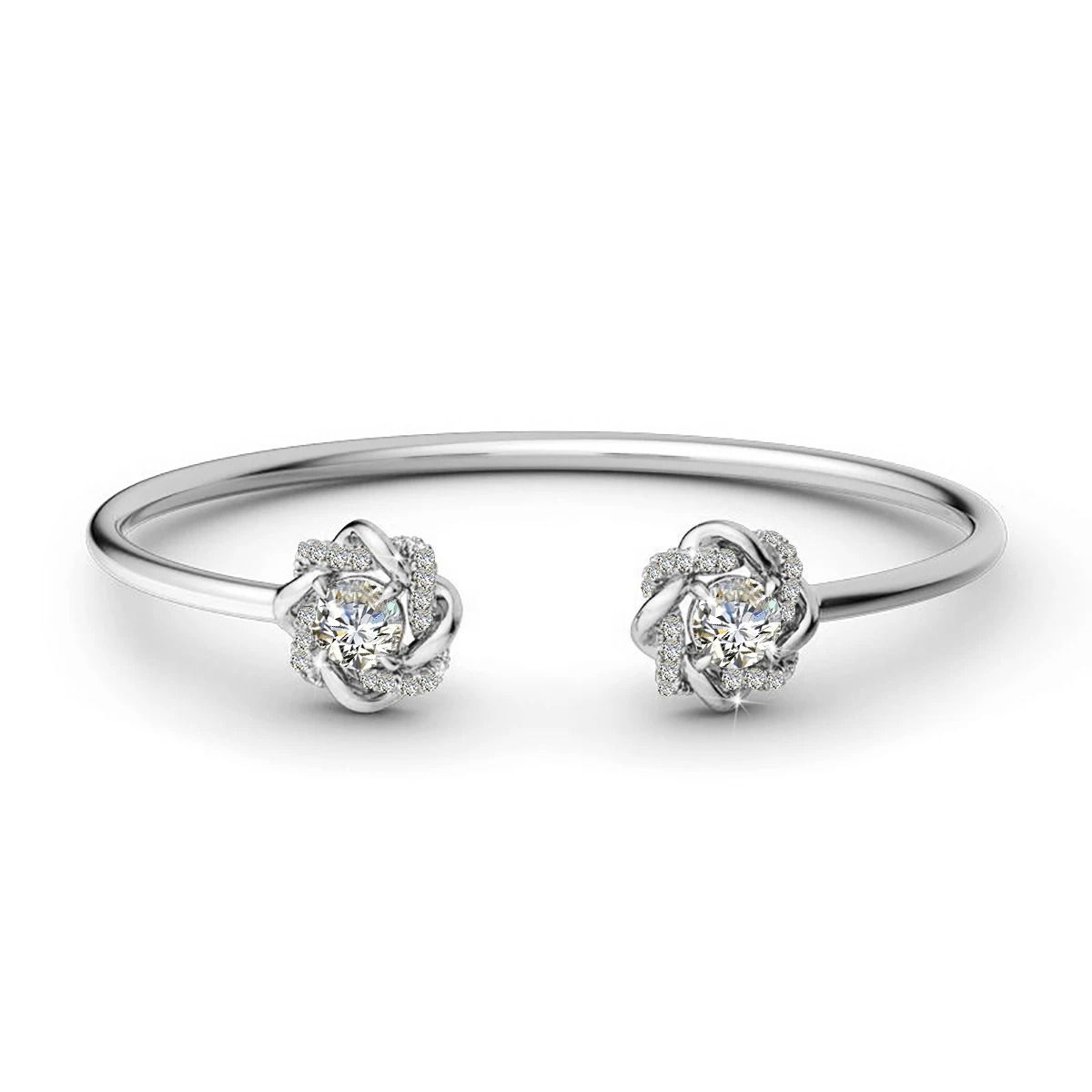
- Cuff: An open, rigid band with a gap at the wrist, slipped on from the side. Widths range from a slim 3 mm to a bold 15 mm. Cuffs adjust slightly and work for a wide range of wrist sizes.
- Bangle: A closed, rigid circle that slides over the hand. It needs a true fit—tight enough not to slide off, loose enough to pass over the knuckles. Bangles stack naturally with one another.
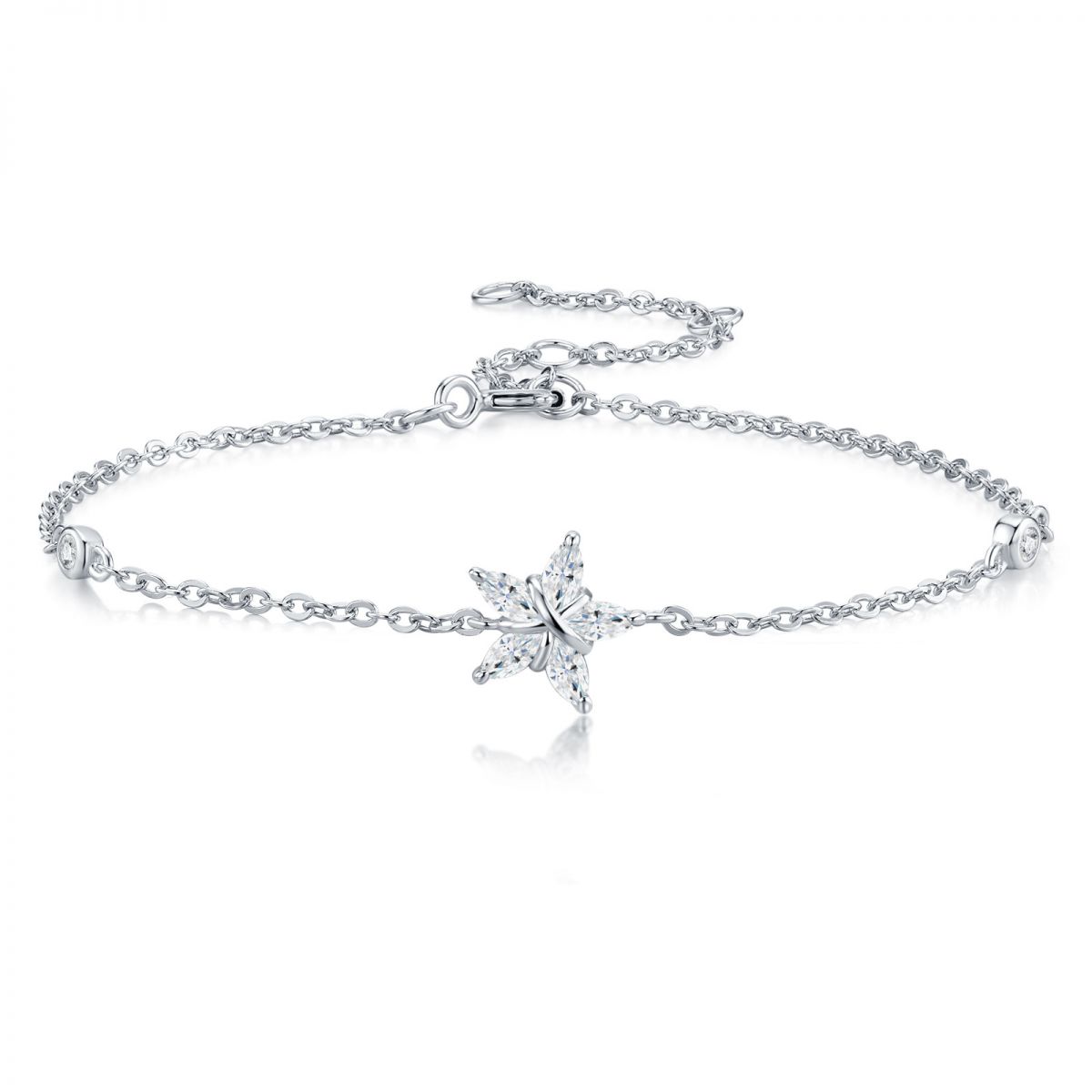
Flex and open bangles bridge the two, offering the bangle silhouette with easier sizing, which makes them the safer stock for retailers uncertain about wrist fit.
Widths and finishes that sell
Three widths cover most bridal demand. A slim 3 to 4 mm pavé or plain cuff works as a wedding-day piece that feels delicate. A 6 to 8 mm soft brushed gold or silver cuff is the modern-default statement—broad enough to read, slim enough not to overwhelm. A 10 to 12 mm wide cuff is the bold, editorial choice for fashion-forward brides. Finishes matter as much as shape: matte and brushed metals outsell mirror polish for the current bride, because they read as intentional rather than flashy. A single line of pavé along one edge, rather than across the whole cuff, is the detail that elevates a plain band into bridal territory.
Stacking with tennis bracelets
The smartest merchandising move is to show cuffs and bangles with a tennis bracelet rather than as a replacement. A slim pavé cuff stacked beside a delicate tennis bracelet gives the bride both structure and sparkle, and it encourages a multi-piece sale. Train staff to present a stack: one thin bangle, one cuff, one tennis piece—then let the bride edit down. This is exactly how stackable bracelet programs drive average order value, and it works particularly well for brides who cannot choose between the classic and the modern look.
Sizing and fit
Cuffs are forgiving—a small bend adjusts the opening—so stock fewer sizes. Bangles are not. Measure wrist circumference and compare with the bangle's inner diameter; a bangle should pass over the knuckles with mild resistance and sit without sliding. For brides who fall between sizes, the flex bangle variant is the reliable recommendation. Always mention that a bangle worn loose enough to slide off easily is a bracelet she will lose on the dance floor.
Bridesmaid and mother-of-bride demand
Cuffs and bangles also work beautifully for the bridal party. A simple brushed cuff in a coordinated metal, given as a bridesmaid gift, is something attendants wear daily far more often than a tennis bracelet. Mothers of the bride and groom often choose a wider, simpler bangle—understated, age-appropriate, and elegant. This means the same cuff range can serve the bride, the party, and the mothers, which is rare for a bracelet category and makes the inventory doubly efficient.
Everyday care and cleaning
Cuffs and bangles are rigid, which means they take knocks that a flexible chain would absorb. Brides should know that a pavé cuff, despite its clean look, needs occasional prong checks just like a ring—the stones ride against door frames and desk edges. Cleaning is simple: warm soapy water and a soft brush along the pavé line, with extra attention to the gap where dust settles. Matte and brushed finishes should be wiped, not polished with a cloth that will leave streaks; a jewelry polishing cloth can dull the intentionally matte look if used too aggressively. Telling brides this up front keeps their cuffs looking the way they did on the day of purchase, which protects repeat business and referrals.
For the 2026 floor, a small, curated cuff and bangle assortment—three widths, two finishes, a handful of pavé accents—is enough to capture the trend without overcommitting. The brides who want it will recognize it immediately, and once they stack it beside the tennis bracelet they came in for, most leave with both.
For third-party reference, the Wikipedia article on moissanite details moissanite’s discovery, optical properties and use in jewelry.
Frequently Asked Questions
What bracelet materials sell best for wholesale?
316L stainless steel and 925 sterling silver. Steel is price-stable and tarnish-resistant; silver captures the gift segment at a higher ticket.
Do you offer mixed-material stacking sets?
Yes. Stacking sets of two to five bands are assembled and packed as a single SKU, which raises average order value without extra inventory.
How do I handle sizing for bracelets?
Bracelet sizing is forgiving: 7 inch fits most women and 8 inch most men. Offer both and note the measurement in your listing.
What is the MOQ and lead time?
50 pieces per design, samples 3–5 days, bulk 15–20 days.
Send your spec sheet — stone, cut, size, plating and quantity — and we will return a costed timeline.
Ask the workshop