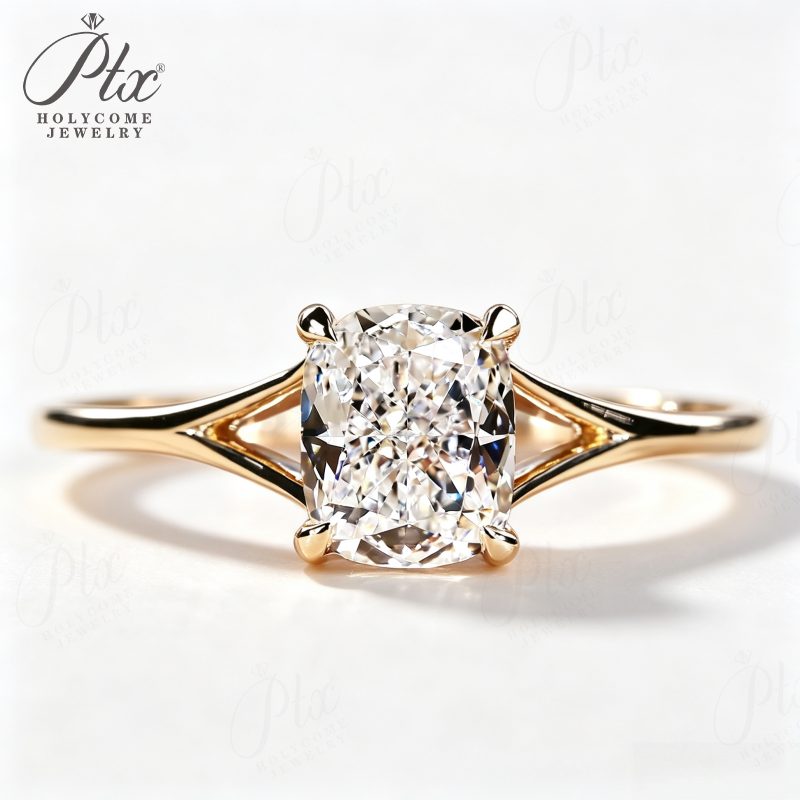
Ring guards and wraps are one of the most practical additions a small bridal jewelry buyer can add to a case. A guard or wrap set pairs a center engagement ring with one or two slim bands designed to sit on either side of it, locking the ring in place, cushioning oversized fingers, and turning a solitaire into a full three-piece bridal look. For independent US jewelers working with factory-direct moissanite and 925 sterling silver inventory, guard-and-wrap sets solve a real customer problem and add a high-margin upsell in the same transaction.
This guide explains what guard and wrap bridal sets are, why American bridal buyers ask for them, the quality points to verify before you wholesale them, and how to price and reorder them profitably.
What Exactly Is a Ring Guard or Wrap Bridal Set?
A ring guard is a band worn on one or both sides of a larger engagement ring to hold it steady. A ring wrap (sometimes called a ring enhancer or jacket) is a shaped band, usually curved or V-shaped, that cradles the center stone and fills the gap between the solitaire and a plain wedding band. Sold as a coordinated set, the engagement ring plus guard or wrap gives the bride a finished, bridal-bag look on the spot.
In wholesale terms, these sets are merchandised as two-piece or three-piece packages: the center ring and one side band (two-piece), or the center ring flanked by two matched bands (three-piece wrap). The bands are usually slim, often channel-set or pavé-set with small moissanites, so they complement rather than compete with the center stone. Some wraps are designed as a single shaped band that splits around the setting, while others are genuinely two independent rings that happen to pair.
Why US Bridal Buyers Ask for Guard and Wrap Sets
The fit problem guard sets solve
Many brides inherit or receive an engagement ring that fits loosely on a swollen finger, especially after weight changes or in warmer months. Instead of committing to an irreversible resize, retailers can offer a guard set that tightens the effective fit while adding visual width. This is a particularly common request from customers who want to keep the original ring untouched and from shoppers buying online who cannot try the ring on first.
Style layering without resizing
A guard or wrap also adds style. A plain solitaire instantly reads as a fuller, more elaborate bridal set when flanked by two pavé bands. Customers who love the look of a halo but do not want to upgrade the center stone often choose a wrap instead. This lets the retailer raise the ticket without raising the center-stone cost.
The sentimental-value angle
Guard sets carry an emotional advantage. A customer whose engagement ring has family meaning often refuses to resize or alter it at all. Selling a guard is the only non-invasive way to make that ring wearable and beautiful. When your team frames the guard as protecting a beloved ring rather than fixing a problem, the upsell feels like care, not a sales pitch.
Moissanite and 925 Silver Guard Sets: What to Verify Wholesale
Because the bands must sit flush against the center ring, fit precision matters more here than with loose bands. Before you place a bulk order, check these points on the sample set:
- Metal and plating consistency: Confirm the guard, wrap, and center ring are all stamped 925 sterling silver and plated to the same tone and thickness. Mismatched rhodium or rose-gold plating shows immediately when the rings are stacked.
- Curvature match: The inner curve of the wrap must match the outer shank of the center ring. A poor curve leaves a visible gap or forces the rings to tilt.
- Stone alignment: Pavé stones on the side bands should sit level, with no prongs that catch on the center ring setting.
- Comfort fit: Stacked rings wear narrow. Check that the combined width is comfortable for daily wear and that the inside edges are polished smooth.
- Prong security: Because stacked rings rub against each other constantly, small pavé prongs must be finished tightly so stones do not loosen over months of wear.
How to Price and Merchandise Guard-and-Wrap Sets
Retailers typically price a guard-and-wrap set as a bundle rather than pricing each ring separately and adding them. Bundling protects margin: customers perceive the set as a complete solution and compare it against a single retail ring, not against loose bands. A common approach is to price the engagement ring at your usual bridal markup and then present the guard or wrap at an attractive add-on price that still clears your target gross margin.
Merchandise the sets together in the case, stacked exactly as they will be worn. A loose band beside a solitaire does not communicate the finished look nearly as well as a pre-staged three-piece stack. Train your sales team to open the conversation about guards early, since fit and styling are decided at the moment of try-on, not after the customer leaves. Keep a display of the same ring shown both alone and stacked, so the customer sees the transformation instantly.
MOQ and Reorder Strategy for Guard Sets
Because guard and wrap sets depend on matching a specific center ring shank, they are not one-size-fits-all. Start with a small opening order in your fastest-moving center-ring profiles, and keep reorders tied to what actually sells. With a factory-direct partner such as GemWSL in Wuzhou, you can order in controlled quantities and reorder the exact curves and plating tones your customers request, rather than committing to a large inventory that may not match your local clientele.
Keep a running note of which center-ring widths and shank shapes your guards pair with best. Over two or three reorder cycles, you will build a guard set that is tuned to the profiles you already carry, which reduces returns and improves the close rate at the counter.
Who Buys Guard and Wrap Sets: Typical Retail Scenarios
Three customer profiles drive guard-set demand. First is the online engagement buyer who never tried the ring on and arrives at your store with a slightly loose solitaire, looking for a quick, affordable fix. Second is the customer inheriting a family ring she refuses to alter, for whom a guard is the only respectful option. Third is the bride who simply wants a fuller three-piece look without buying a more expensive center stone. Recognizing these profiles lets your team recommend the right set within minutes.
Because these buyers are often already emotional about the ring, framing the guard as a protective, reversible solution lowers resistance. They are not looking for a cheap band; they are looking for confidence that the ring will stay safe on the finger. Stocking a few flexible guard options in common sizes means you can solve that problem in one visit rather than sending them home to think about it.
Conclusion
Ring guard and wrap bridal sets are a low-risk, high-upside category for independent jewelers. They solve a genuine fit problem, lift the average bridal ticket, and let you sell more of the moissanite and 925 sterling silver pieces you already stock. Source samples, verify curvature and plating, bundle the price, and reorder against proven sellers to build a guard section that turns steadily and protects your margins.