Stacking changes the unit economics of a bracelet sale
A single bracelet sold on its own is a transaction. Three bracelets stacked on one wrist is a style story, and three units carry a very different margin profile. For independent jewelers, the stackable trend is one of the clearest opportunities to raise average ticket size without raising prices. The customer does not feel upsold; she feels accessorized.
The retailers winning in this space are not simply piling every bracelet they own onto a display. They curate. They buy a deliberate mix of textures, widths, stones, and metals that actually layer on the wrist, and they price the range so that adding a second or third piece feels natural rather than expensive.
The four layers every stack needs
A wearable stack is built like an outfit. It needs a foundation, a focal point, a texture contrast, and a finishing accent. When you curate wholesale SKUs, aim to cover all four roles rather than buying ten near-identical tennis bracelets.
- Foundation: a thin, smooth 925 sterling silver chain or delicate station bracelet in neutral metal.
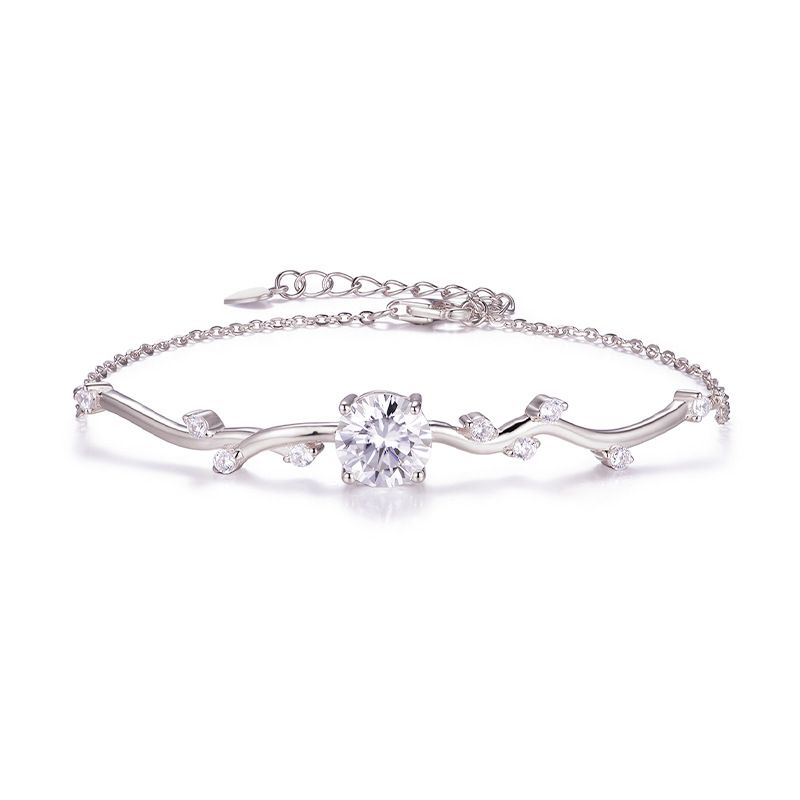
- Focal point: a moissanite tennis bracelet or charm piece that carries the sparkle and the price anchor.
- Texture contrast: a beaded, twisted, or braided bracelet that breaks up the shine.
- Finishing accent: a slim gold-plated bangle or initial piece that personalizes the stack.
When these four roles are represented in your display, a customer can start with one and confidently add the next. When your wall is ten variations of the same thing, she chooses one and leaves.
Metal tone strategy
The old rule that a customer picks one metal and stays loyal is fading. Mixed metal stacks are now mainstream, which gives you permission to stock warm gold-plated, cool sterling silver, and rose-plated pieces side by side. The key is consistency: each individual bracelet should be beautifully finished on its own, so the mix looks intentional rather than random.
For bridal customers, keep a dedicated all-silver or all-gold stack for the wedding day itself. The mixed-tone trend is for everyday and gifting, not for the strictest bridal party coordinators who need every bridesmaid to match.
Width and weight: the hidden coordination factor
Customers rarely notice width in isolation, but they notice instantly when two bracelets fight each other on the wrist. Curate widths deliberately. Pair a two-millimeter chain with a six-millimeter tennis bracelet and a ten-millimeter textured cuff. That gradient reads as intentional. Pair three equally chunky pieces and the wrist looks crowded rather than styled.
Weight matters too. A stack should feel comfortable, not leaden. If your wholesale samples feel heavy against the wrist, your customer will try them on once and never wear the full set out. Light, balanced pieces get worn; worn pieces drive compliments; compliments drive referrals.
Pricing the stack so it adds itself
Smart buyers build a clear price ladder. Entry pieces under your impulse threshold, a focal moissanite piece in the middle, and a few finishing accents near the lower price tier. When the second bracelet costs almost as little as the customer expected to spend on the whole purchase, adding it feels obvious.
Offer a lightly stacked bundle price only when it encourages a third unit rather than discounting the first. The goal is more units per customer, not thinner margins per piece.
Trends to watch and how to test them cheaply
Test new stack themes with small pilot orders before committing capital. Charm bangles, pearl-and-silver mixes, and slim engraved bangles are all low-risk experiments. Order twenty or forty pieces in a theme, watch the attach rate for sixty days, then scale the winners and retire the flat performers.
Why mix-and-match beats fixed sets
Some suppliers sell pre-bundled stack sets locked into one combination. They look tidy in a photo, but they rarely match how real customers actually build a wrist. A bride may love the focal tennis bracelet but already own a chain in the exact tone of your foundation piece. A teenager may want the textured cuff but skip the gold-plated bangle because she only wears silver. Fixed bundles force the customer to take what you decided; mix-and-match curation lets her build what she actually wants.
The smarter play is to stock complementary pieces and let the customer combine them. This gives you higher margin per transaction because she selects only what she loves, and it creates repeat visits as she returns to add the next layer to her collection. The store that sells a finished wrist of three chosen pieces earns a customer for years; the store that sells one pre-packaged set earns a single transaction.
Photograph the stack, not the solo piece
The visual cue that sells stacking is seeing the look in context. A tennis bracelet photographed alone reads as a single product. The same bracelet photographed on a wrist with a thin chain and a textured cuff reads as a style the customer wants to recreate. Invest in a few well-lit wrist shots of your best stacks for the product pages, the display signage, and your social posts.
Those images also train your staff. When a customer points to a photographed stack, the associate knows exactly which three SKUs to pull. The display stops being a wall of unrelated bracelets and becomes a catalog of achievable looks. That shift alone typically lifts attach rate, because the customer is no longer guessing what pairs with what.
Finally, do not confuse abundance with curation. A wall that holds sixty bracelets is not automatically better than a wall that holds thirty. The winning stores rotate. They retire the flat-selling pieces at the end of each season, refresh the stack themes, and keep the display looking intentional rather than crowded. Curating a stackable range is an ongoing editorial job, not a one-time buy, and the retailers who treat it that way keep raising their average ticket year after year. Treat the wall like a seasonal editorial, and the same customers will keep coming back to add one more layer.
Your curation checklist
- Cover all four stack roles: foundation, focal, texture, accent.
- Plan a width gradient rather than uniform chunk.
- Keep mixed-tone everyday stacks plus a coordinated bridal stack.
- Build a price ladder that makes the second piece feel easy.
- Pilot trends in small batches before scaling.
Stackable bracelets reward the retailer who thinks like a stylist. At GemWSL, we supply the moissanite focal pieces and the 925 sterling silver foundations that anchor these stacks. Buy the range deliberately, display it as a look, and your average ticket will start climbing before you consciously push a single add-on.