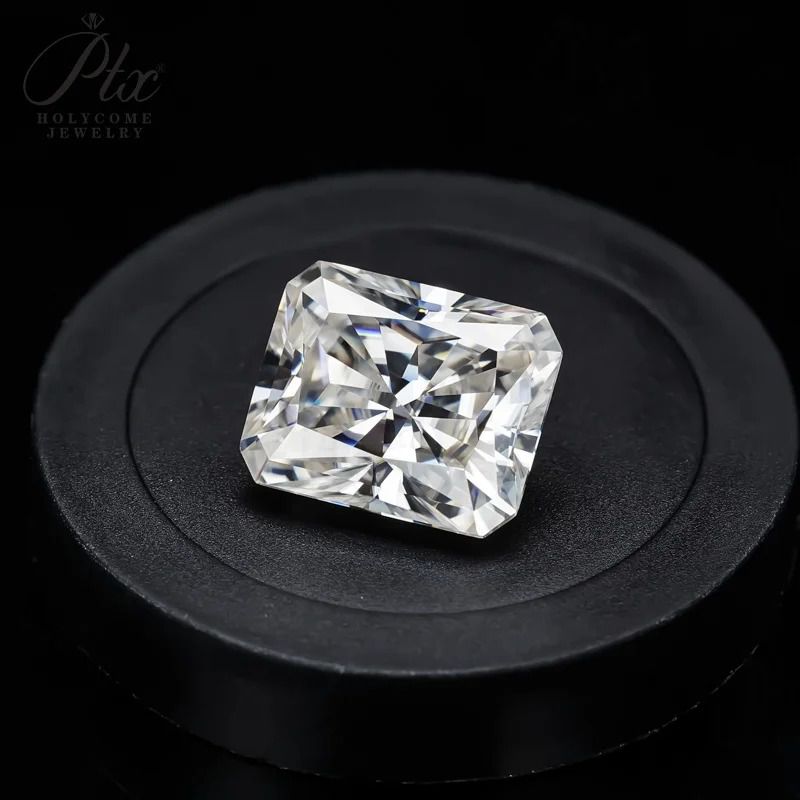
Most new wholesale buyers assume that importing loose moissanite means picking individual stones from a catalog the way you would buy a lab-grown diamond. In practice, the factory-direct model out of Wuzhou works around parcels: pre-grouped lots of stones mixed by size, shape and grade, sold at tiered minimum order quantities. For an independent US jeweler, getting the parcel strategy right determines how much cash you tie up in inventory, how quickly you can respond to custom orders, and how healthy your margins stay. This guide explains how MOQs actually work and how to build an order that fits your store.
What "MOQ" means in factory-direct moissanite
MOQ, or minimum order quantity, is the smallest number of stones (or smallest total order value) a factory will ship in one export parcel. Unlike consumer marketplaces, Wuzhou moissanite factories are set up to supply wholesalers, not individual shoppers. A typical MOQ structure looks like this:
- Sample / trial order: 1-5 individual stones, usually at near-list price, to let you inspect cut, color and certificate quality.
- Small wholesale parcel: 10-50 stones, mixed across a few popular mm sizes (5.0 mm, 6.5 mm, 7.0 mm, 8.0 mm), at the standard wholesale tier.
- Mid-volume parcel: 50-200 stones, allowing you to specify shape mix and color grade at a deeper discount.
- Bulk / factory container: 200+ stones, often priced per carat with custom labeling, branding dropshipping support, and certificate serialization.
The MOQ is not just a per-shipping rule — it is a price-tier gate. The deeper tiers exist because larger production runs let the factory cut to tighter tolerances and amortize certificate and export handling across more stones.
How parcels are actually mixed
When you order a parcel, you are rarely buying "ten 1-carat rounds." You are usually buying a mixed lot that covers the sizes your case actually turns. A well-structured 30-stone round-brillant parcel from GemWSL, for example, might be mixed as:
- 5.0 mm (0.25 ct equivalent): 4 stones — for stud earrings and small right-hand rings.
- 6.5 mm (1.0 ct): 12 stones — the bridal anchor, this is your volume size.
- 7.0-7.5 mm (1.25-1.5 ct): 8 stones — upsell tier for oval and round upgrades.
- 8.0 mm (2.0 ct): 4 stones — halo and statement rings.
- 9.0+ mm (3.0 ct+): 2 stones — showcase piece, slow turnover, high margin.
That mix reflects how the US bridal market actually consumes stones. If you over-order 8.0 mm stock, your cash sits in inventory that turns once a quarter. If you under-order 6.5 mm rounds, you turn away the customers who walk in asking for "the classic one-carat solitaire."
Shape mixing inside a parcel
Most factories will let you split one parcel across multiple shapes. A common structure is:
- 60% round brilliant (the volume shape).
- 20% oval (fastest growing demand).
- 10% pear or cushion (statement and vintage customers).
- 10% emerald or princess (niche, high-margin designs).
Ask your supplier whether the parcel price holds if you mix shapes. Some factories quote one price for single-shape parcels and a small surcharge for mixed lots; others treat mixing as standard.
Grade and color consistency across a parcel
When you order D color VVS stock, every stone in the parcel should match that grade. But across 50 stones, there will be small natural variations — a slightly darker 6.5 mm, an oval with a faint bow-tie, a stone that reads a touch grayer under cool light. A good wholesaler accepts that and sorts the parcel internally: top stones go to the bridal case, mid-grade stones go to fashion rings set in yellow gold, and lower stones are set aside for clearance or custom projects. Ask whether your supplier pre-sorts parcels or ships them as-cut.
Cash-flow friendly order strategy
The most common new-buyer failure mode is ordering too much inventory in the first quarter and then watching it sit in a safe while the rent comes due. Moissanite is not a speculative commodity; it is a working inventory that turns only when customers walk in. Start small, measure sell-through honestly, and scale the parcel size only when you have three months of reorder data. A store that turns a 30-stone parcel twice a year is healthier than a store that bought 200 stones once and is still paying it off twelve months later.
For an independent store that is not yet sure of its moissanite velocity, we recommend this phased approach:
- Month 1: Order 1 sample stone per shape, D VVS, in 6.5 mm. Test your market, photograph the stones, list them online.
- Month 2: Place a 30-stone mixed parcel anchored at 6.5 mm rounds, with 7.0 mm ovals and a few 8.0 mm statement stones.
- Month 3-4: Reorder what turned. If 6.5 mm rounds sold out in two weeks, double that line. If the emerald cut sat, do not reorder it until you have a specific customer asking.
- Quarter 2: Once you have six months of sell-through data, move into a 100+ stone parcel at the deeper price tier.
This strategy keeps your first order under a typical small-wholesale MOQ, gives you real sell-through data before you commit cash, and prevents the classic new-buyer mistake of overstocking the trendy shape that looked great on TikTok.
Sample stones vs bulk parcels: why the sample order matters
The single highest-ROI step a new buyer can take is ordering one sample stone before committing to a parcel. A sample lets you inspect the cut, check the body tone under your own store lighting, compare the certificate against the girdle inscription, and photograph the stone for your website. It also lets you test your bench's setting workflow with a stone you can afford to lose. We see new buyers skip this step, order a 50-stone parcel, and then discover under their store lights that the stones read gray-blue. The sample order costs very little relative to a full parcel, and it is the cheapest insurance you will ever buy. Order a sample in each shape you plan to stock, wait two weeks, and only then place the parcel order.
Shipping, documentation and import handling
Each parcel ships with individual stone certificates, a packing list that maps every stone by mm and shape, and the export paperwork US customs expects. For a typical 30-stone parcel, total landed cost — stones plus tracked shipping plus import duty handling — is small enough that most independent stores can absorb the trial order as working capital. Confirm whether your supplier ships DDP (delivered duty paid) or DAP, and budget accordingly.
GemWSL offers trial parcels starting at 10 stones, mixed-shape and mixed-size, with matching GRA certificates on every stone. Ask for our current parcel mix template if you want a starting order sized for a typical US independent boutique, and we can also include one sample stone per shape so you can verify cut and body tone before the full parcel ships.