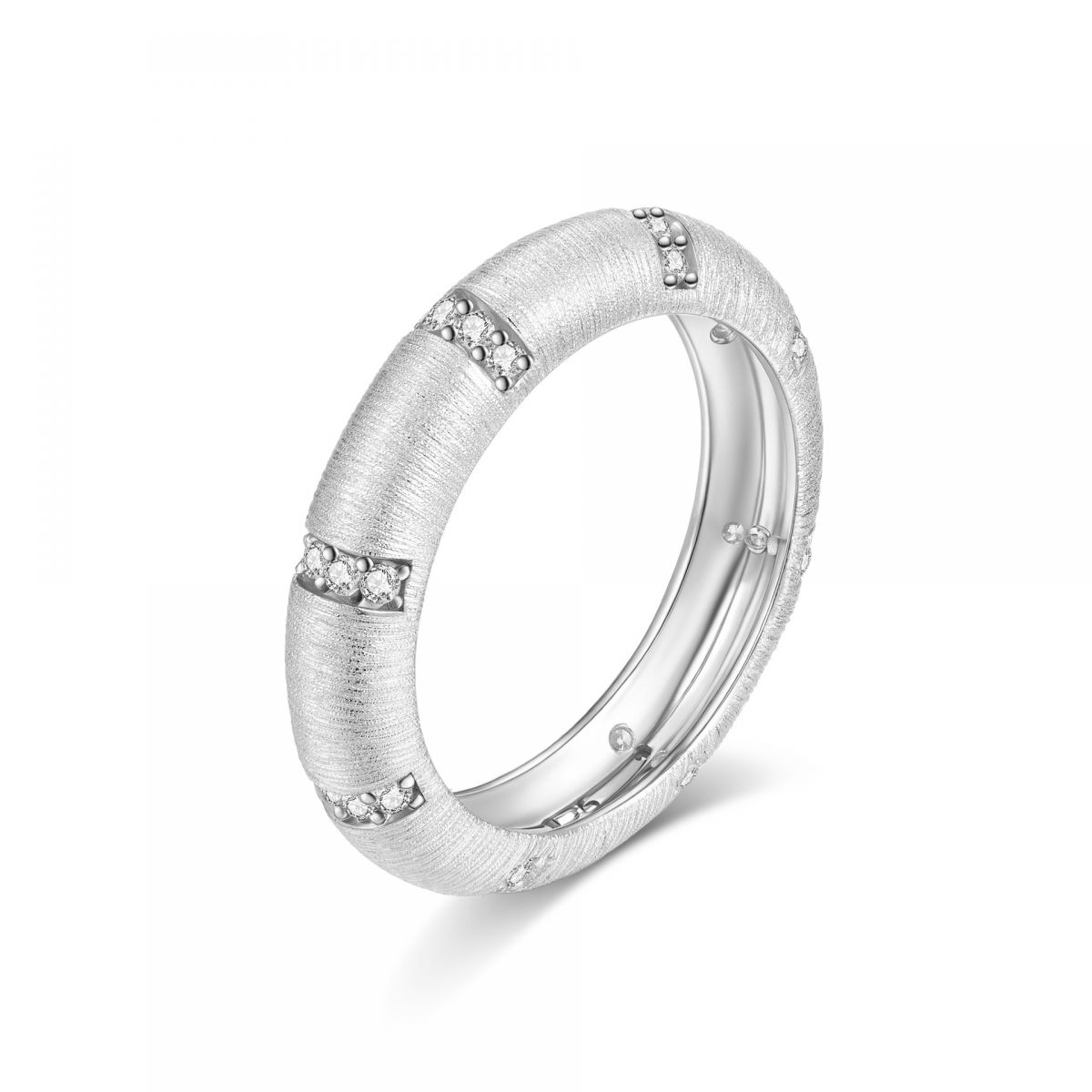
When a US independent jeweler buys 925 sterling silver wedding bands at wholesale, one of the first decisions is not the width or the profile, but the plating on top. The two most common finishes for bridal silver bands are rhodium plating and gold vermeil. They look different, wear differently, and suit different customer segments. Choosing between them is not a matter of taste alone; it is a merchandising decision that affects return rates, service tickets, and average order value.
GemWSL manufactures both finishes in our Wuzhou facility, and we see the full range of what sells, what comes back, and what reorders. This guide explains what each finish actually is on a 925 silver base, how they compare on durability and care, which shoppers choose which, and how to balance them in your bridal band inventory.
Starting Point: The 925 Sterling Silver Base
Every band discussed here begins as solid 925 sterling silver: 92.5% silver alloyed with copper for hardness. Sterling silver is the most popular base for fashion-bridal jewelry in the US because it is hypoallergenic for most wearers, takes a bright polish, and is a familiar, trusted material. Left unplated, silver naturally tarnishes and can react with skin chemistry, which is why nearly every bridal silver band sold at retail receives a protective plating.
The plating is what the customer actually sees and feels. It determines the color, the reflectivity, and the first line of defense against scratches and tarnish. Get the plating right for the customer's lifestyle, and the band looks new for years. Get it wrong, and you will be talking about re-plating within twelve months.
Rhodium-Plated Bands: The White-Gold Look
Rhodium is a member of the platinum family. Plated over 925 silver, it produces a cool, bright, mirror-white finish that is visually almost indistinguishable from white gold or platinum. Rhodium is also exceptionally hard, which is why it is the standard finish on every diamond and moissanite engagement ring sold in the US, regardless of the base metal. A rhodium-plated silver band pairs seamlessly with a moissanite solitaire, because the solitaire setting itself is almost always rhodium-plated.
On the downside, rhodium plating will eventually wear through on high-friction areas—the inside of the band, the bottom edge that brushes against the knuckle. For a daily-worn wedding band, expect a re-plate visit at roughly twelve to eighteen months. That is not a defect; it is normal maintenance, and it is exactly the same maintenance cycle a solid white gold ring goes through. Educating the customer up front prevents the "my ring turned yellow" complaint at the one-year mark.
Rhodium is the default choice for grooms who want a white band, for brides stacking next to a white-metal engagement ring, and for anyone who wants the most traditional bridal look. Black rhodium, a related finish, is a strong fashion trend for men and for brides who want an edgier stack.
Gold Vermeil Bands: The Warm-Gold Alternative
Gold vermeil is a specific standard: a thick layer of gold, typically 10K or 14K, plated over a sterling silver base. In the US, true vermeil is defined by a minimum thickness of gold and a silver core, which differentiates it from cheap gold-flashed fashion jewelry that wears off in weeks. A well-made vermeil band carries real gold on the surface, so it responds to polishing the way solid gold does and develops a warm, lived-in glow rather than a cheap, peeling finish.
Rose vermeil, using rose gold over silver, is one of the strongest bridal trends of the last several seasons. Rose gold flatters a wide range of skin tones, photographs beautifully, and reads as modern without being trendy to the point of expiry. Yellow vermeil is the safe, traditional choice for brides who want a warm band next to a yellow-gold engagement ring, but who do not want the price of solid gold.
Durability-wise, vermeil is slightly softer than rhodium because gold is a softer metal. It shows micro-scratches sooner, but it also hides them better because the scratches read as natural gold patina rather than a contrast against a white surface. Vermeil bands rarely need re-plating in the first two years for most wearers.
Side-by-Side Comparison
- Look: Rhodium is cool, bright, mirror-white; vermeil is warm gold or rose gold with a softer glow.
- Hardness: Rhodium is harder and more scratch-resistant; vermeil is softer but ages gracefully.
- Pairing: Rhodium matches white-metal engagement rings; vermeil matches yellow or rose gold settings.
- Re-plate cycle: Rhodium typically needs a refresh at 12–18 months; vermeil often runs 2+ years.
- Customer profile: Rhodium appeals to traditional and groom buyers; vermeil appeals to fashion-forward and warm-tone shoppers.
- Wholesale cost: Both are close on a 925 silver base, with vermeil usually a small premium depending on gold layer thickness.
Which to Stock by Customer Segment
A balanced inventory carries both, but the ratio depends on your market. In bridal districts where most engagement rings are white-metal (moissanite solitaires, classic diamonds), rhodium should represent the majority of your band wall. In warmer climates and in Southern and Western US markets, rose and yellow vermeil demand is stronger. In college towns and younger-skewing markets, rose vermeil outsells yellow by a wide margin.
We suggest starting with a 60/40 split toward rhodium and adjusting after your first sell-through report. Watch which vermeil tones reorder: if rose vermeil is moving twice as fast as yellow, shift the next PO. The beauty of factory-direct sourcing from a single Wuzhou manufacturer is that you can adjust that ratio every quarter without renegotiating with multiple suppliers.
Pricing, Margin, and Consumer Expectations
Because both finishes sit on the same 925 silver base, the wholesale price difference is small, but the retail perception is not. A vermeil band often retails at a slight premium over a rhodium band, because shoppers associate gold with higher value. That premium falls straight to margin. Frame it to the customer as a gold look at a silver price, and you have a value story that competes with both fast fashion and fine jewelry.
Be transparent about what the product is. A band marketed as "solid gold" when it is vermeil is a return waiting to happen. Marketed as "gold vermeil over sterling silver," with a care card explaining that it is real gold over silver, it is a deliberate, defensible purchase. Independent jewelers win on trust, and clear material labeling protects that trust.
Closing: Stock Both, Label Clearly
Rhodium plating and gold vermeil are not competitors; they are two tools in the same kit. Rhodium delivers the traditional white-bridal look that pairs with every moissanite solitaire, while vermeil delivers the warm, fashion-forward look that younger brides and rose-gold loyalists ask for. On a 925 sterling silver base, both deliver a quality that rivals solid white gold or yellow gold at a fraction of the retail price. GemWSL produces both finishes to consistent thickness and quality standards in our Wuzhou factory, with private-label packaging and engraving available. Pick the ratio that fits your market, label the materials clearly, and let your customers choose the finish that matches their hands and their lives.