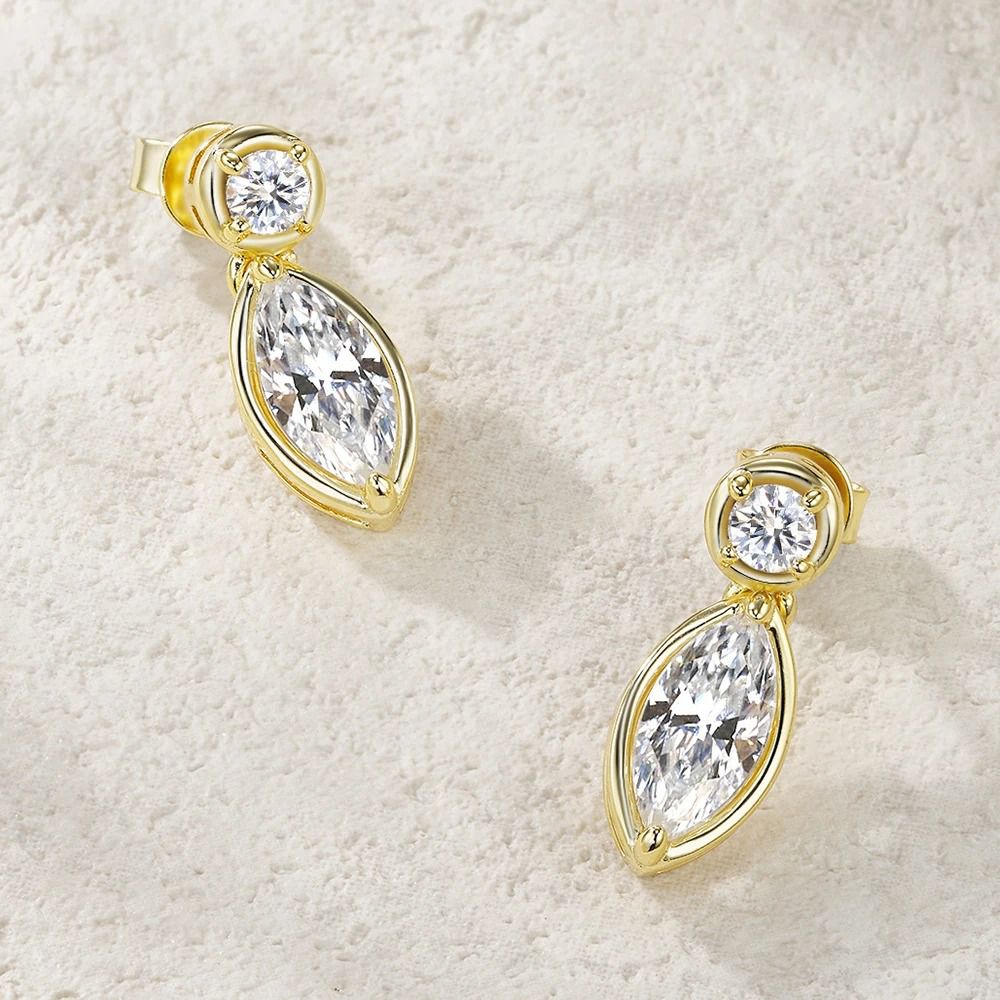
Most earring purchases are decided at the counter, not in the case. A customer walking past your window sees a card, picks it up, turns it over, and decides in seconds whether the piece inside is a gift, a treat, or a leftover. Yet earring packaging is the most under-invested part of many independent jewelry stores. The right earring card does not just hold the pair; it sells it, protects it, and carries your brand onto the customer's dresser at home.
What a retail earring card actually does
An earring card is a small cardboard or paperboard insert, usually with two punched holes, that holds a pair of studs or small hoops by their posts. It is the unit of sale. Beyond that basic function, a well-designed card does four jobs at once:
- It displays the piece at eye level, on a hook rack or in a tray, so the customer can see the silhouette without touching the stone.
- It protects the finish. Sterling silver and rhodium plating tarnish and scratch when pieces rub together in a bulk bin. A card keeps each pair isolated.
- It carries information: metal content, stone type, price, care notes, and your store name.
- It travels home with the customer. The card becomes the storage tray, which means your branding sits on her dresser for months.
A card that does all four jobs turns a $40 stud into a $60 stud without changing a single thing about the jewelry itself. That is the highest-leverage packaging decision in the earring category.
Card stock, size, and finish
Cheap, flimsy cards undercut even the finest moissanite. For a retail price point above $30, expect to use a thick paperboard — 350 gsm or heavier — with a matte or soft-touch finish. Glossy cards fingerprint and photograph poorly. White and soft cream are the safest base colors; black and navy read as premium but limit your ability to add gold foil stamping later. If you want a seasonal look, use a small belly band or sticker rather than reprinting the whole card.
Standard card sizes range from about 40 x 60 mm for a simple stud up to 60 x 90 mm for a small drop. Match the card size to the earring, not to a one-size-fits-all tray. A small 10 mm huggie on an oversized card looks lost; a chandelier drop on a tiny card looks cramped. For longer drops, use a vertical card with a reinforced bottom edge so the piece does not tip forward on the hook.
Hole punch placement matters
The punched holes should sit so that the earrings hang naturally and the stones do not overhang the card edge. For studs, holes are centered and spaced to match typical ear separation. For hoops and huggies, holes are placed so the hoop's front curve faces forward when the card hangs on a hook. Test a sample card on your actual hook rack before committing to a print run, because a card that flips around on the hook will never sell well. A card that hides the back of the hoop or lets the stone swing against the cardboard is a card that fights your display rather than helping it.
What to print on the card
Resist the urge to clutter the card. A clean, high-converting card usually carries:
- Your store logo or brand mark, small, in a corner.
- The metal content, such as "925 Sterling Silver" or "Rhodium Plated 925 Silver".
- The stone type, such as "Moissanite" and the total carat weight where relevant.
- The price, on a peel-off sticker rather than printed, so you can adjust without reordering cards.
- A short care line: "Remove before swimming. Wipe with a soft cloth."
- A small made-with-care line, which signals real manufacturing rather than fast-fashion supply.
For moissanite specifically, a small line noting "lab-grown, D color, VVS clarity" does the education work your staff would otherwise repeat a hundred times a day. It also pre-empts the "is this real?" question, because the customer has already read the answer in her hand. Compliance-wise, U.S. shoppers expect clear metal content labeling; vague "fine silver" or "silver tone" wording erodes trust on pieces you want to position as real sterling.
Sustainability and the modern buyer
An increasing share of U.S. independent shoppers ask about packaging waste. A sturdy, reusable earring card that the customer keeps as a storage tray is already more sustainable than a disposable plastic bag. You can go further by using FSC-certified paperboard and water-based inks, and by offering a small jewelry pouch as an upsell for gifts. These choices cost little but resonate with the exact customer who buys sterling silver rather than alloy in the first place.
Sourcing cards with your wholesale order
Many retailers order earrings from one supplier and cards from another, which adds freight, timing risk, and a mismatch in size. When you buy factory-direct from a Wuzhou workshop, ask whether they can supply blank or custom-printed earring cards in the same shipment. Even a plain, well-cut card printed with your logo is cheaper and faster than coordinating two vendors, and you can experiment with a small run before committing to a full rebrand. If you are just starting out, begin with a neutral card design that works across studs, huggies, and small drops. Add a branded sticker on top rather than printing directly. That flexibility lets you refine the design without wasting inventory.
The payoff
Earring cards are one of the few packaging decisions that directly raise perceived value. A 925 silver moissanite stud on a well-designed card sells for a premium over the same piece in a plastic bag, and customers keep the card long enough to repurchase from the brand they remember. Treat the card as part of the product, not an afterthought, and your earring shelf will start converting walk-in traffic on its own. The stores that win on earring sell-through are rarely the ones with the most designs; they are the ones whose designs look the most deliberate on the hook.
As a final practical step, audit your existing cards once a quarter. Pull a few pairs off the hook and look at them the way a first-time customer would. Are the cards bent? Is the price sticker crooked? Does the metal content read clearly? A tired card undermines even the nicest moissanite, and replacing a few hundred cards costs far less than the customers who walk away because the whole display looks neglected. Keep a small stock of blank cards and stickers on hand so you can refresh a tired pair in minutes rather than waiting for the next wholesale shipment.